
The problem annealing solves
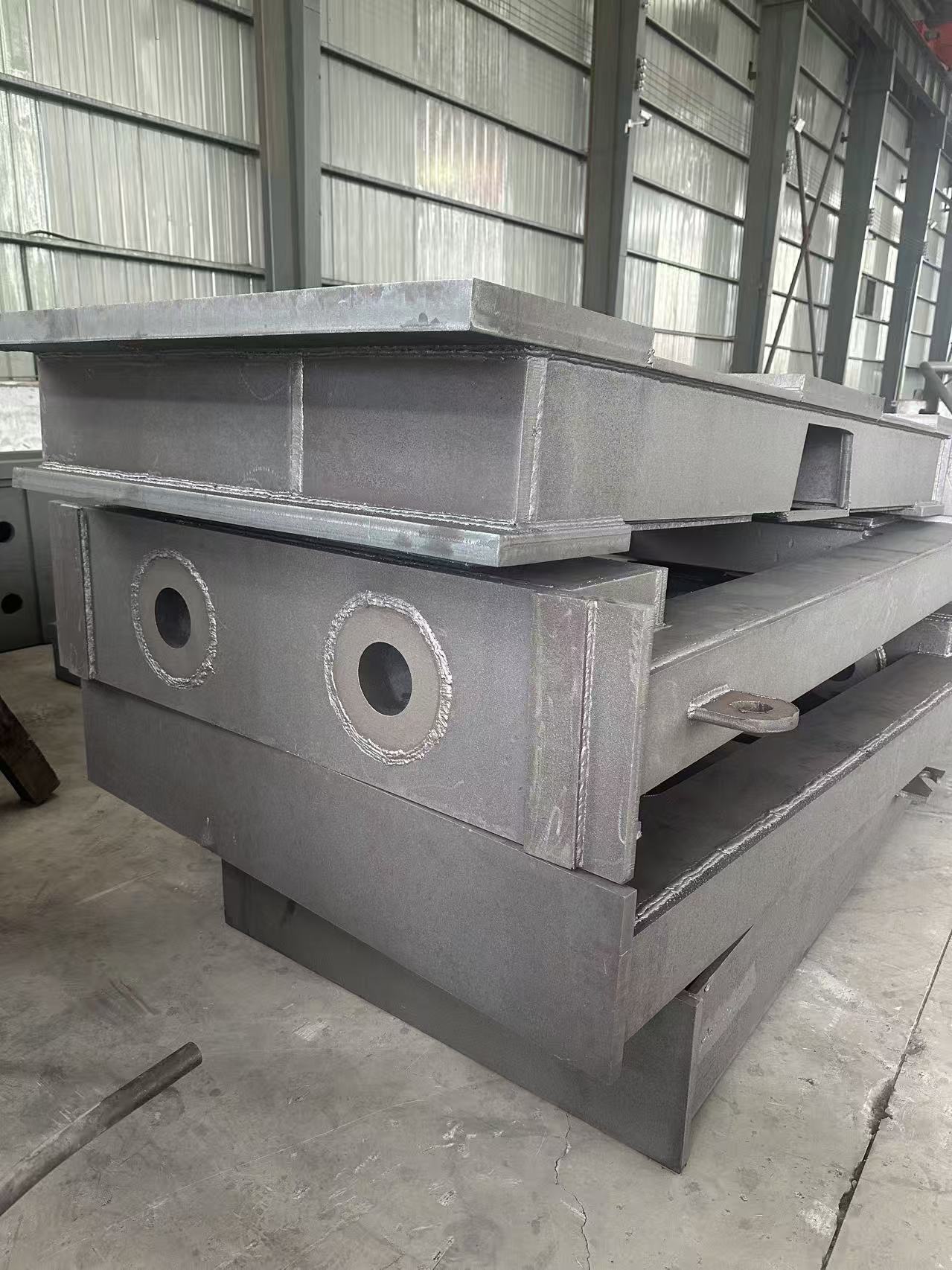
A weld is a localised event at high temperature. As the joint cools, the metal shrinks — and the surrounding plate holds it in place, so the finished body carries locked-in stress long after the workshop goes quiet. The body looks stable and measures stable on the day it leaves welding.
The stress does not stay put forever. When material is removed from a stressed body — by a boring head, a milling cutter, a facing pass — the remaining structure rebalances, and the body moves. A bore that measured true directly after machining can drift out of position days or weeks later. The movement is small, but machined features exist precisely because someone cares about small.
The sequence, and why each step sits where it does
Read the table from the middle: the rule is that nothing machined may precede the anneal. Every step after machining assumes the body is stable, which is only true because of the steps before it.
| Stage | What happens | Why here |
|---|---|---|
| Fabricate | Plate cut, formed and welded into the body | Creates the structure — and the residual stress |
| Stress-relieve | The body is annealed so the structure settles | Releases stress before any feature depends on geometry |
| Shot blast | Scale removed; clean, uniform surface | Prepares the settled body for inspection and finish |
| Machine | Bores, pads, faces and openings cut | Features are cut into a body that has already moved as much as it will |
| Inspect, treat, pack | Checked against the drawing, treated, crated | The verified geometry is what ships |
Which features need it most
Small weldments with no machined features may not justify the step; that is an engineering judgement made against the drawing. The principle is simple: if a machined feature has to be where the drawing says after the part has lived a while, the body must settle before that feature is cut.
- Bores and bearing seats, where position and size both matter and drift is visible in the assembled machine.
- Mounting pads and faces that carry a tolerance or an interface to another component.
- Any feature that will be used as a datum for work done later, at the customer or on the production line.
- Large, heavily welded bodies — more weld metal and thicker plate means more stored stress to release.
Where shot blasting fits
Shot blasting is not a cosmetic step. After annealing, the body carries scale and surface oxide; blasting removes them and leaves a clean, uniform surface, which matters for two practical reasons. Inspection is honest on a clean surface — weld quality and geometry can actually be seen. And the finish that follows — paint, oil or the specified treatment — goes onto a prepared surface rather than onto scale that will later flake.
What to specify on the weldment drawing
A drawing that marks these lets the quotation state the process honestly — including where the anneal sits. The drawing is the specification; the sequence is how it gets honoured.
- The features to machine, with the tolerances they carry.
- The surfaces that must stay as-welded versus machined.
- The finish required after blasting (or note if blasting is the final specified state).
- Any interfaces to other components, so their positions are machined in the same setup logic.