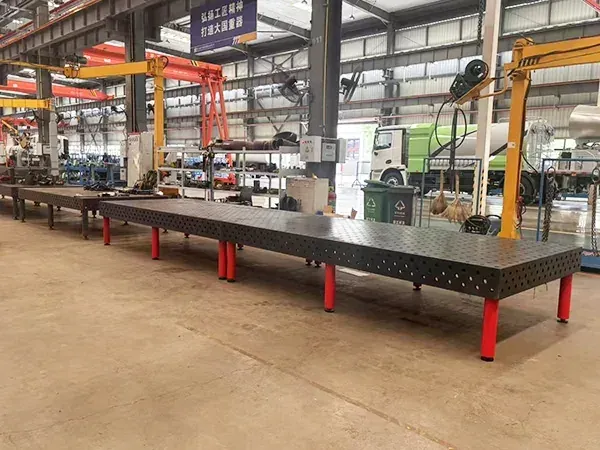
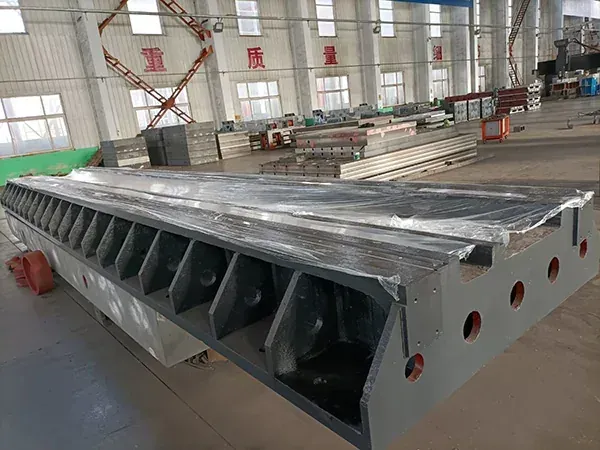
Long fabricated steel 3D welding platform with machined hole grid

Fabricated steel platform

Steel 3D Welding Table

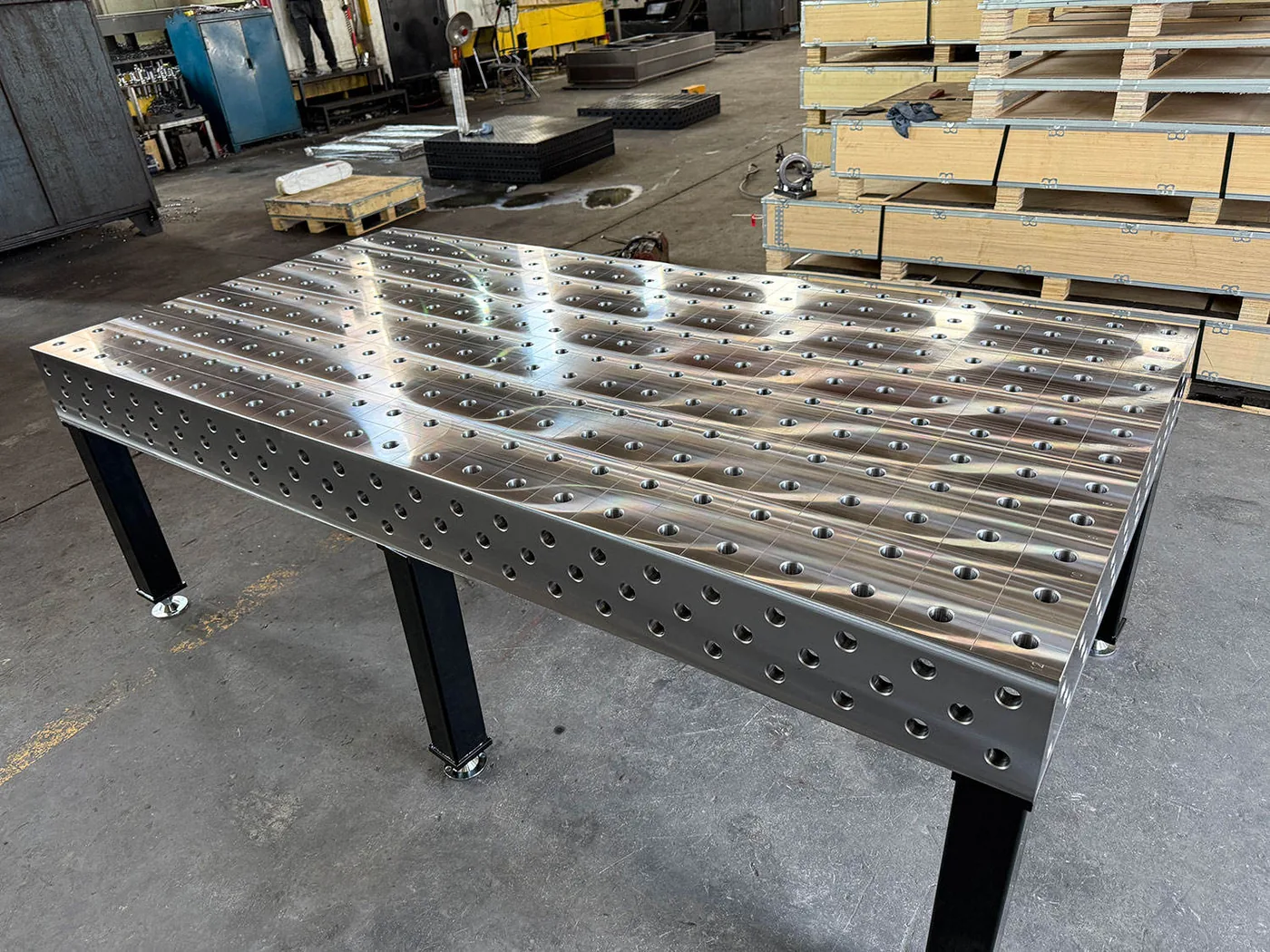
A welded steel 3D platform with precision-machined top and side faces for large fixtures, frames and repeat production.

Best forLarge fabrications, long frames and configurable production fixtures
Request configuration

System highlights

Built to hold the part, not just to look flat

  • Welded steel body with internal reinforcement
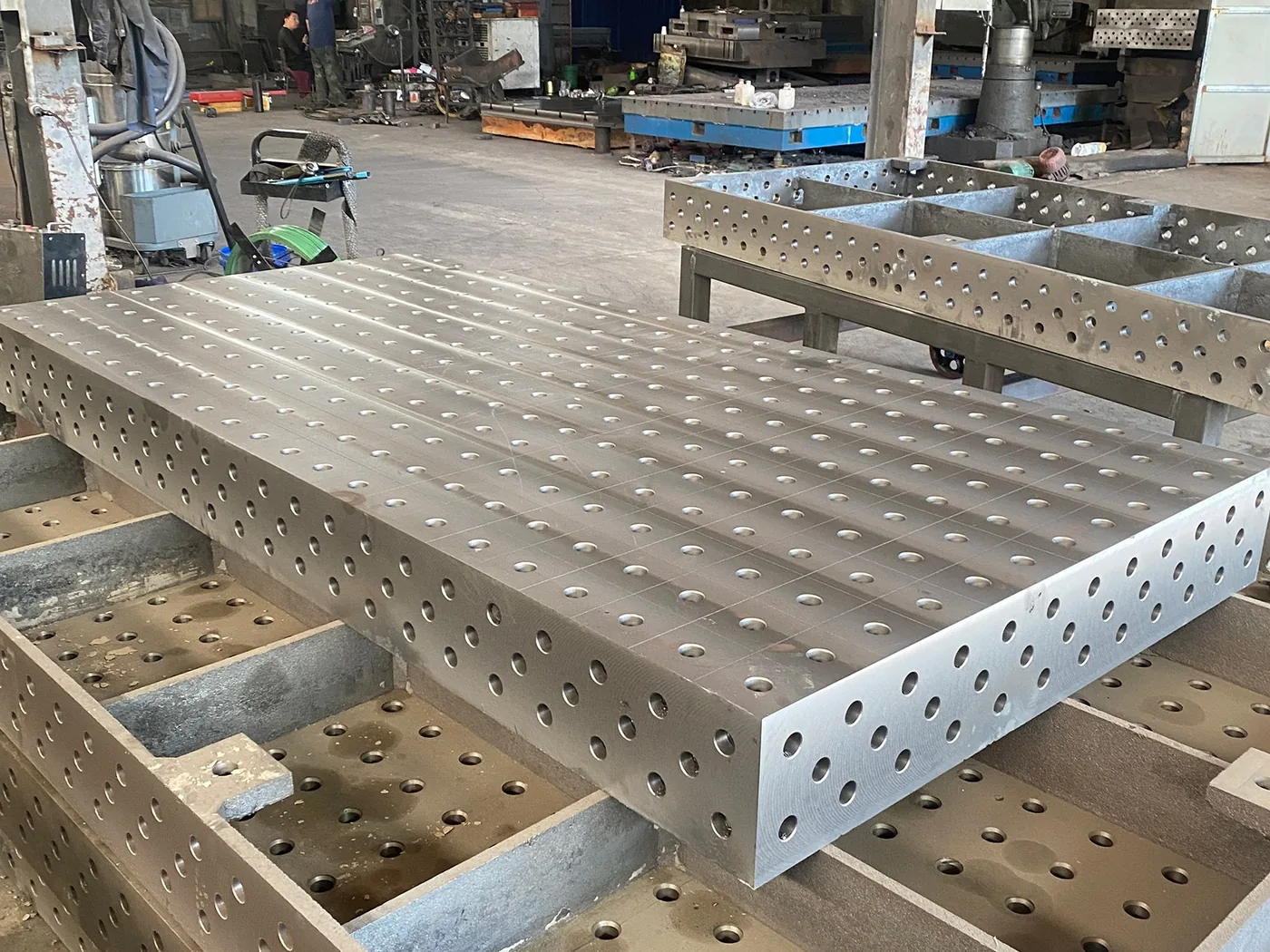
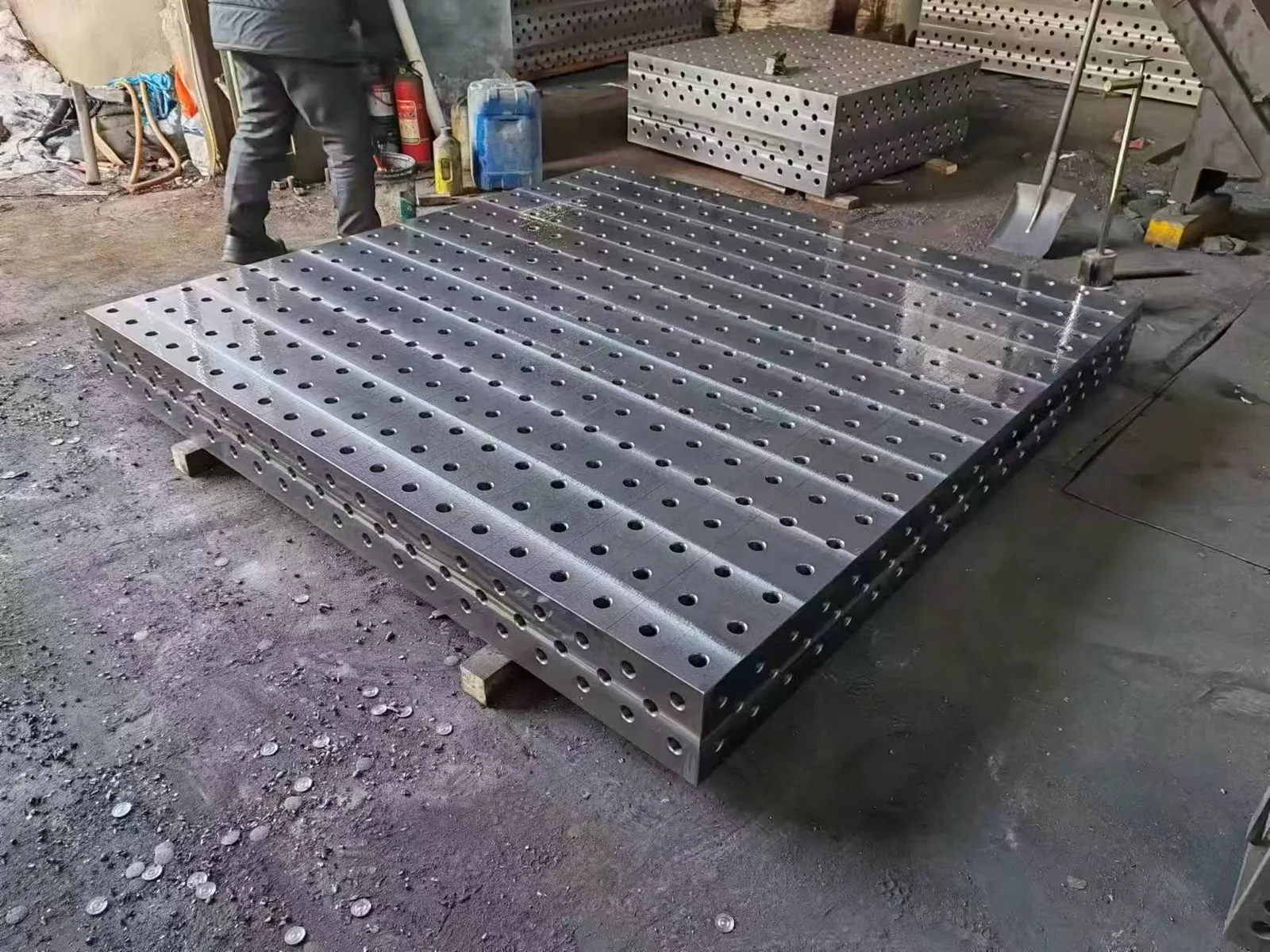
  • Machined top and four side faces carry the modular hole grid
  • D16, D22 or D28 hole system to suit the workpiece
  • Flatness from 0.1 mm/m² standard up to 0.02 mm/m² high precision
  • Built to confirmed project dimensions, up to 4000 × 2000 mm

Specifications

Confirmed against your drawing before production.
Construction
Fabricated steel platform
Hole system
D16, D22 or D28
Working faces
Top and four side faces
Table sizes
500 × 500 mm up to 4000 × 2000 mm
Platform height
100 or 200 mm; custom heights available
Hole spacing
50 or 100 mm
Hole type
Plain bore sized to the selected D16, D22 or D28 system
Flatness
0.1 mm/m² standard, 0.05 mm/m² precision, 0.02 mm/m² high precision
Materials
Q235, Q355, HT250 or HT300; other materials available on request
Surface treatment
Rust-preventive oil, plasma nitriding or black oxide
Support
Legs or fabricated steel frame with levelling feet or castors
Machined steel 3D welding table surface with hole grid

In production

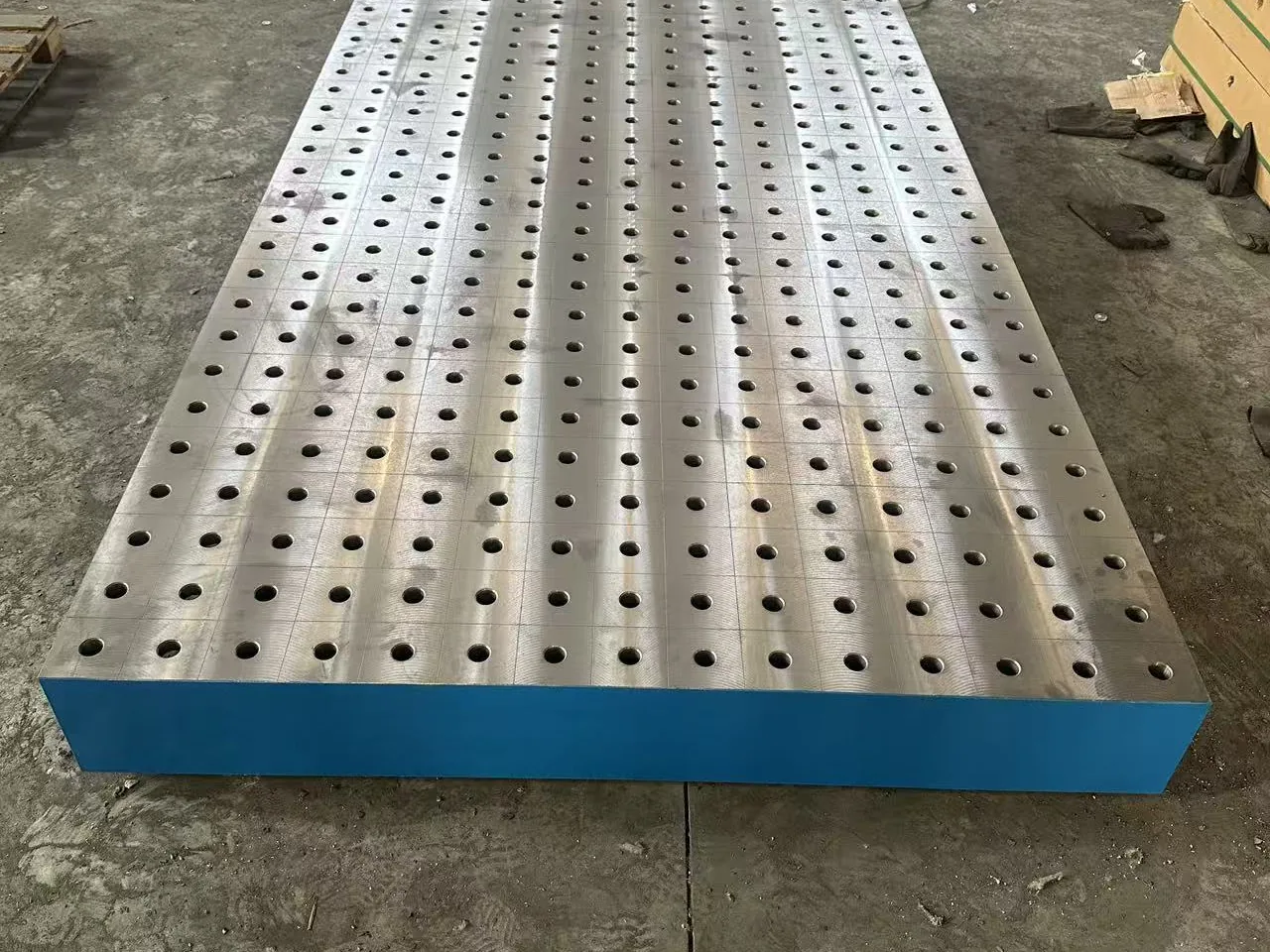
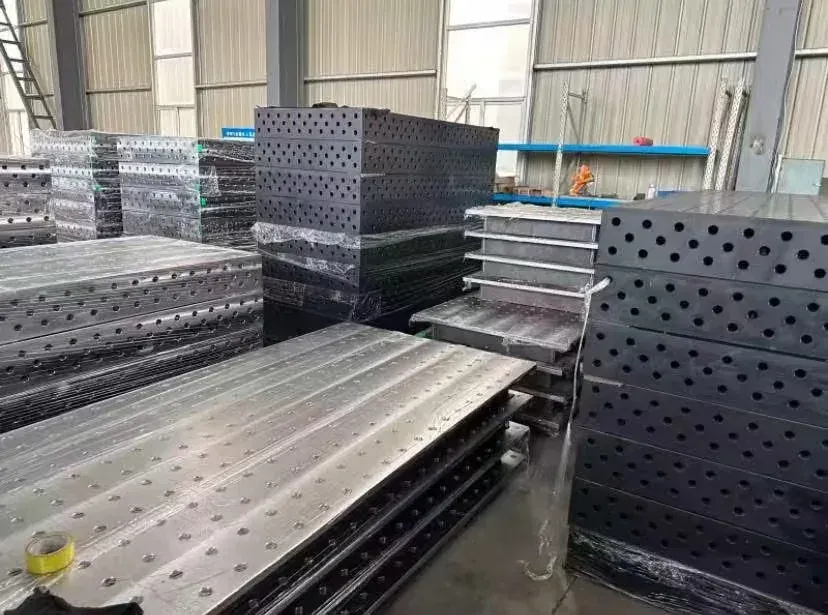
Machined, checked, then packed for export

Working faces are machined and measured before the platform is packed in a crate. The hole grid and flatness are verified so the fixtures you buy later fit the table you already have.

Explore fixtures

Hole systems

D16, D22 or D28: pick the grid around the work

The hole system sets how much holding force the table gives you and how fine the positioning is. It is the first decision, because every clamp, pin and stop has to match it.
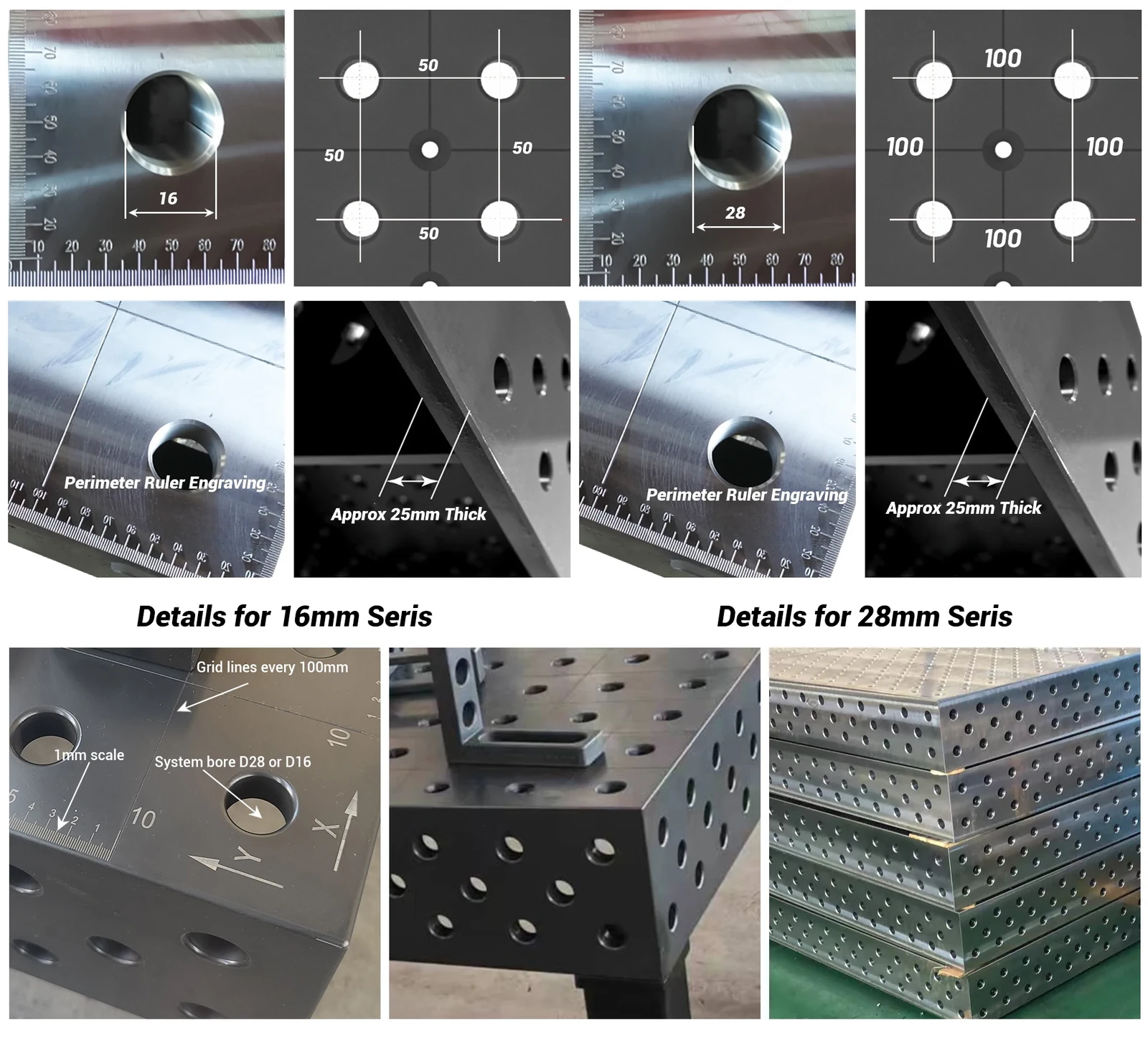
Close-up of 16 mm and 28 mm series welding table hole details

What actually changes between the series

Larger holes take larger pins and clamps, so a D28 table holds heavy structures more securely. Smaller holes let you place stops closer together, which helps small parts and tight geometry. The machined grid, hole spacing and flatness are set at the same time, so tell us the workpiece and we will match the system to it.

  • Grid spacing confirmed against the drawing
  • Plain bore matched to the selected system
  • Flatness from 0.1 mm/m² down to 0.02 mm/m²

Buyer guides

Confirm the specification before ordering

Use these practical guides to compare hole systems, surface requirements and the accessories needed for your work.

Machined 3D welding platform showing the hole grid carried onto the vertical side face
6 min read

2D vs 3D welding tables: when the side faces matter

A 2D table gives you one working plane: the top face and its hole grid, so everything is held down onto that surface. A 3D table machines and drills the four side faces as well, so fixtures can also mount at 90° to the tabletop. Choose the side faces when a job needs a vertical reference, side access or a square edge to work against; choose a top-face-only surface when all the work is clamped from above on a flat part.

Read the guide
Close-up comparison of 16 mm and 28 mm welding table hole details
6 min read

D16, D22 or D28: choosing a welding table hole system

Pick the hole system from the workpiece, not from the table. D16 suits small parts, jigs and fine positioning. D22 covers mixed job sizes on one table. D28 is for large frames, thick plate and heavy structures where holding force matters more than a fine grid. If you are unsure, send the workpiece size and weight and the decision takes a few minutes.

Read the guide
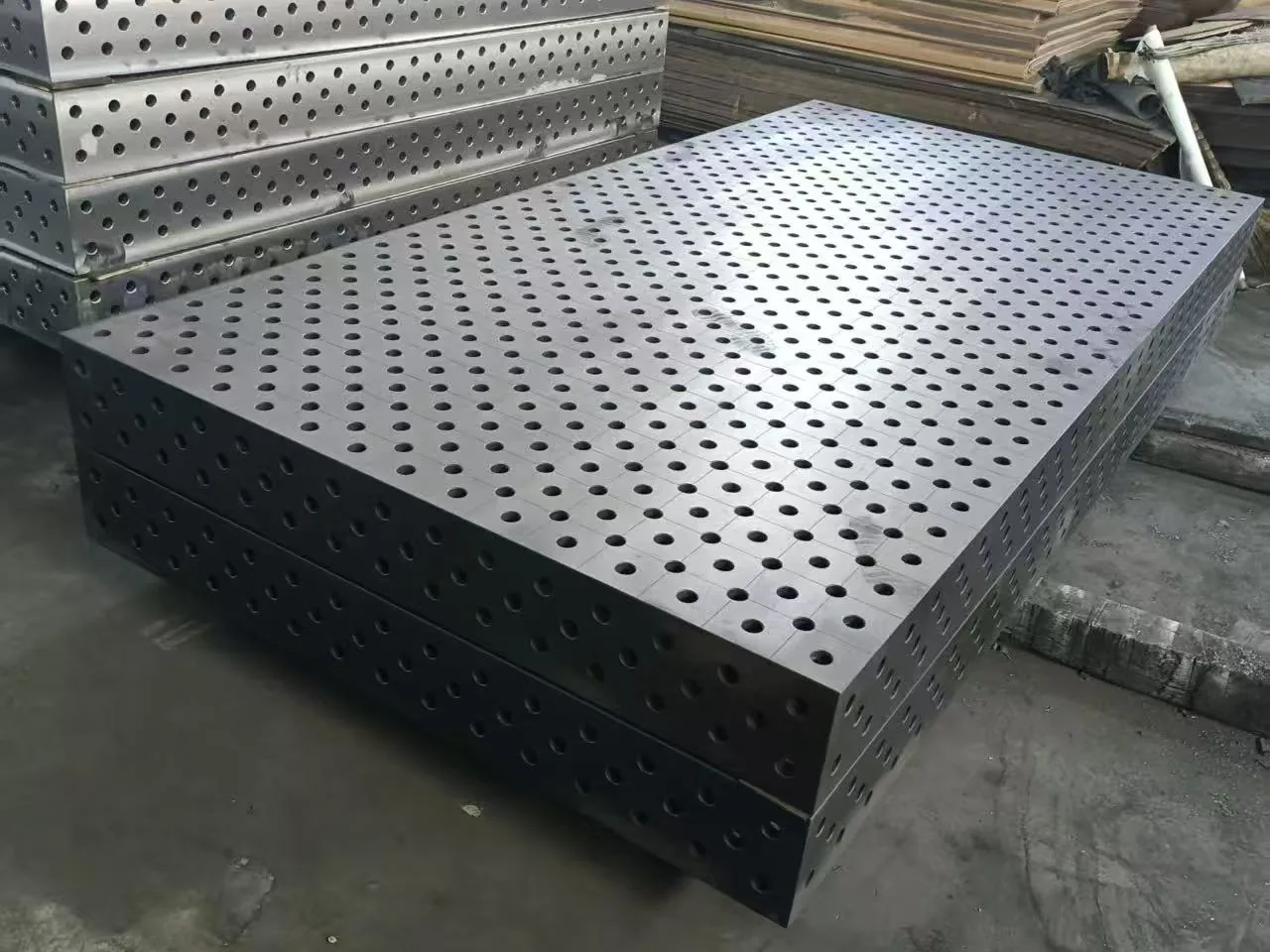
Large steel 3D welding platforms in several sizes prepared in the BECO workshop
7 min read

How to choose welding table size and working height

Start with the largest workpiece, then add clear space for clamps, stops and hands on every side that needs access. Choose the working height from the operator elbow height minus the workpiece and fixture stack above the table. Check the result against cranes, positioners, trolleys and seated work before fixing the leg or base height.

Read the guide
Read all buyer guides

Questions

Steel 3D Welding Table questions

If your question is not here, send it over — practical answers are usually faster than a specification sheet.

Which hole system should I choose, D16, D22 or D28?
D16 suits light and medium parts and fine, compact fixtures. D22 sits in the middle for shops that run mixed job sizes on one table. D28 is the heaviest option, chosen for large frames, thick plate and heavy welded structures where holding force and rigidity matter most. If you send the workpiece size and weight, we will recommend one.
Can the table be made to my dimensions?
Yes. Tables are built to order from 500 × 500 mm up to 4000 × 2000 mm, with platform heights of 100 or 200 mm. Custom heights are also available. Send the workpiece drawing or required size and we will confirm the configuration.
What flatness can the machined surface hold?
Standard tables are machined to 0.1 mm/m². Precision tables are available at 0.05 mm/m², and high precision at 0.02 mm/m². Confirm the tolerance you need at the quotation stage so the machining route is set correctly.
Do the tables come with accessories?
The table is supplied as a platform, and clamping, locating, connecting and maintenance accessories are available separately or as kits. Complete kits are the common choice because a table on its own cannot hold a part.

Have a workpiece in mind?

Turn your next setup into a repeatable system.

Request a quote