Buyer guides

Choosing and specifying welding tables

Practical guides for the decisions that come before an order: hole system, flatness grade, surface treatment, accessories and how to prepare an enquiry.

Choosing and specifying welding tables

All guides

Answers to the questions buyers ask first

Each guide covers one decision and states what it depends on. No catalogue padding — if a number is not confirmed for your application, the guide says so.

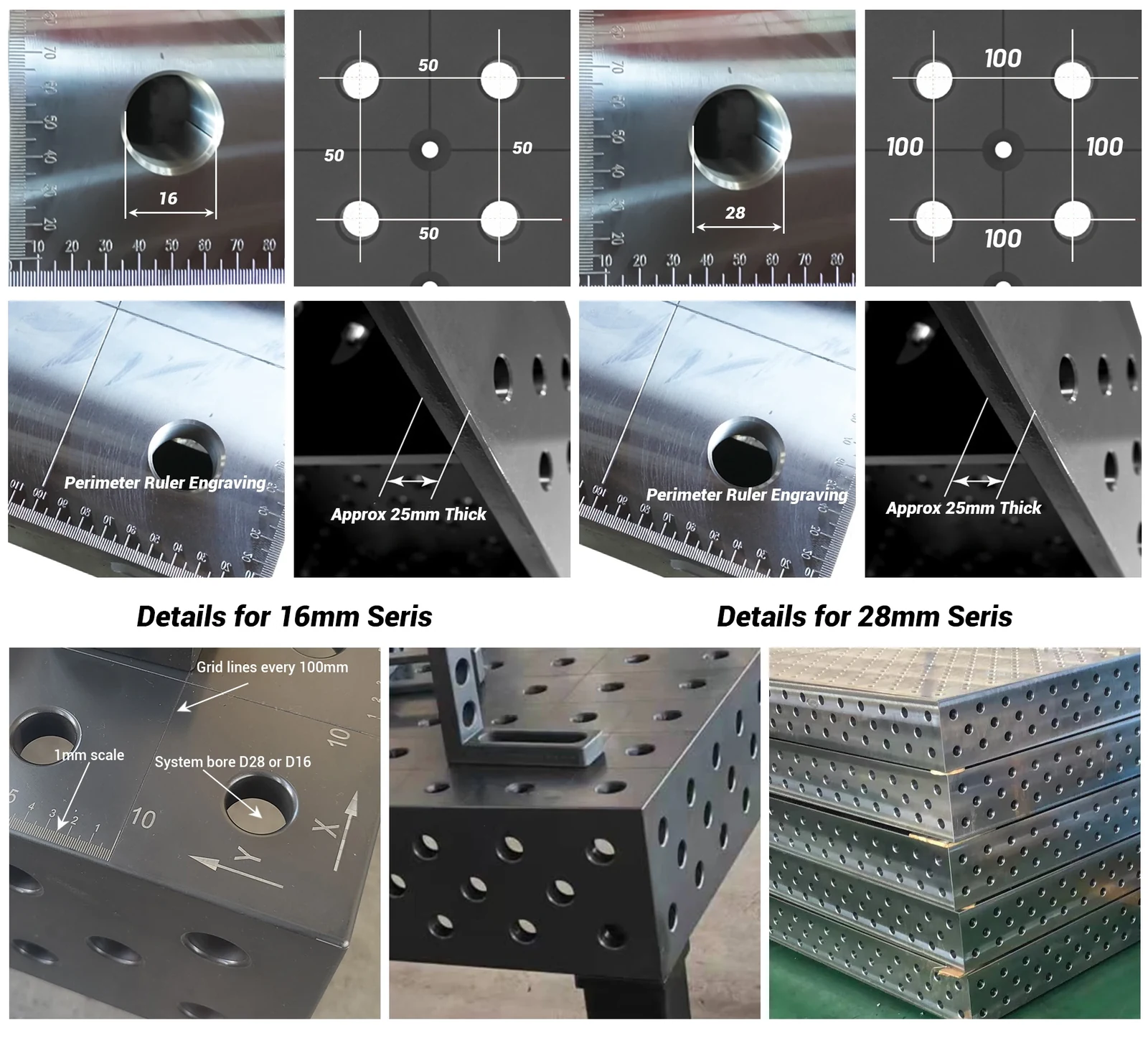
Close-up comparison of 16 mm and 28 mm welding table hole details
6 min read

D16, D22 or D28: choosing a welding table hole system

Pick the hole system from the workpiece, not from the table. D16 suits small parts, jigs and fine positioning. D22 covers mixed job sizes on one table. D28 is for large frames, thick plate and heavy structures where holding force matters more than a fine grid. If you are unsure, send the workpiece size and weight and the decision takes a few minutes.

Read the guide
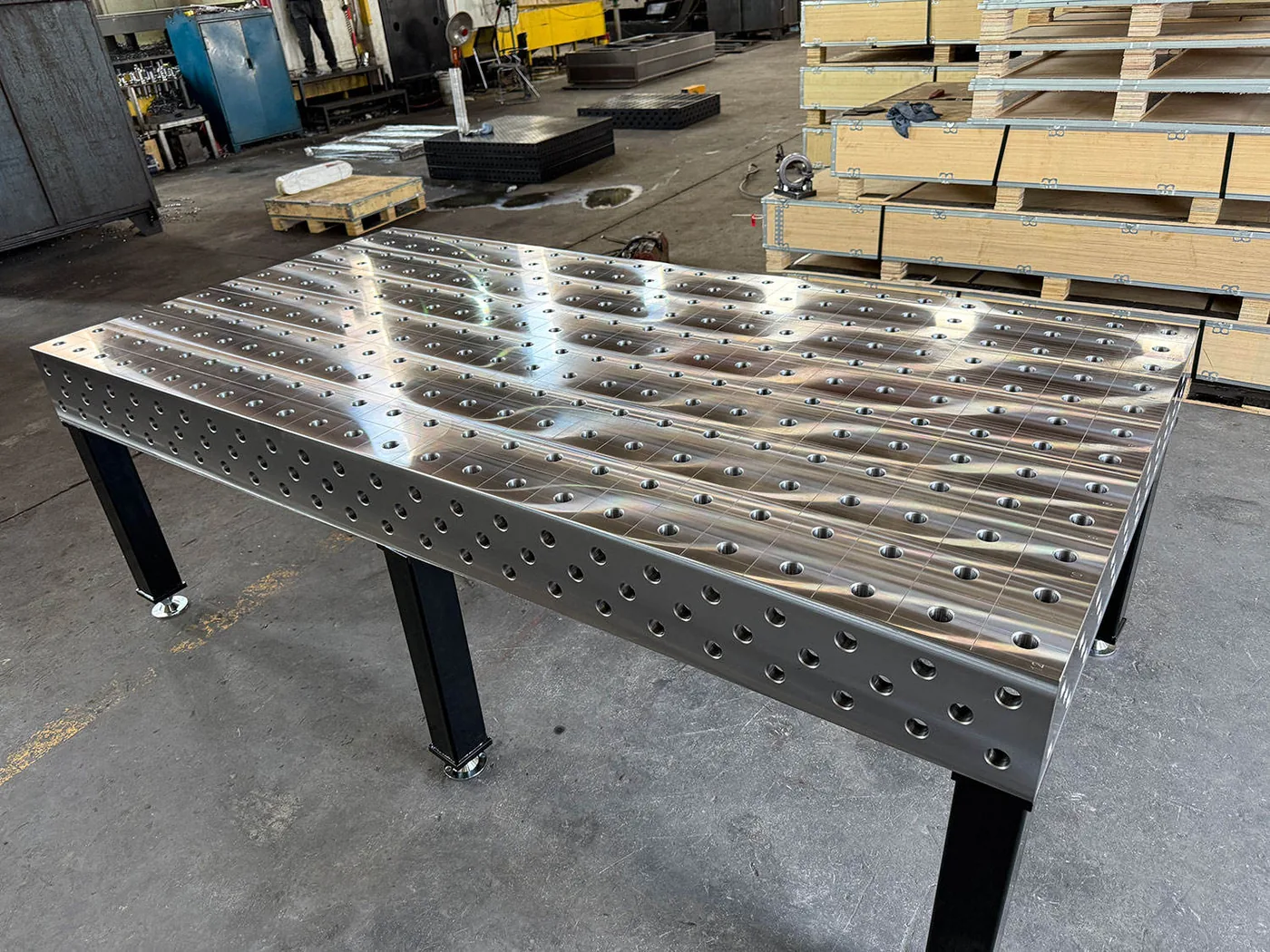
Machined steel welding table surface with a precision hole grid
5 min read

Welding table flatness: what 0.1, 0.05 and 0.02 mm/m² mean for your work

Flatness is specified as a deviation over a reference area, for example 0.1 mm per square metre. Standard tables are machined to 0.1 mm/m², precision to 0.05 mm/m² and high precision to 0.02 mm/m². Choose the grade from the tightest tolerance on the assembly being built, not from the tightest figure available, because each step up costs machining time.

Read the guide
Nitrided steel 3D welding table with a dark surface and steel frame
5 min read

What "nitrided" means on a welding table

Nitriding is a heat treatment that diffuses nitrogen into the steel surface, producing a hard, wear-resistant layer. It is not a paint or coating, so there is no film that can flake off or transfer to the workpiece. On a welding table it protects the machined faces and the hole grid where clamps and pins are used every shift, so the working accuracy lasts longer.

Read the guide
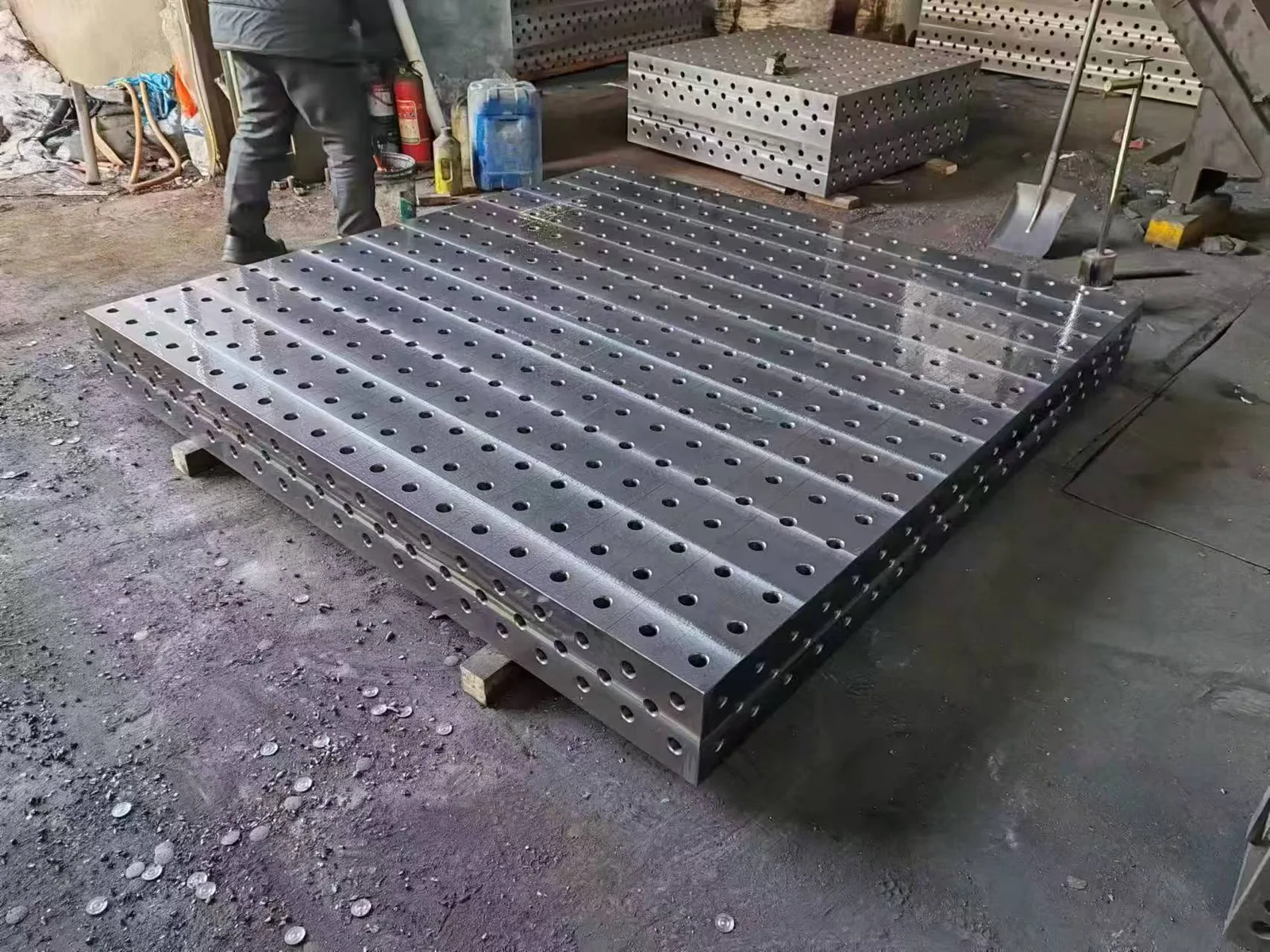
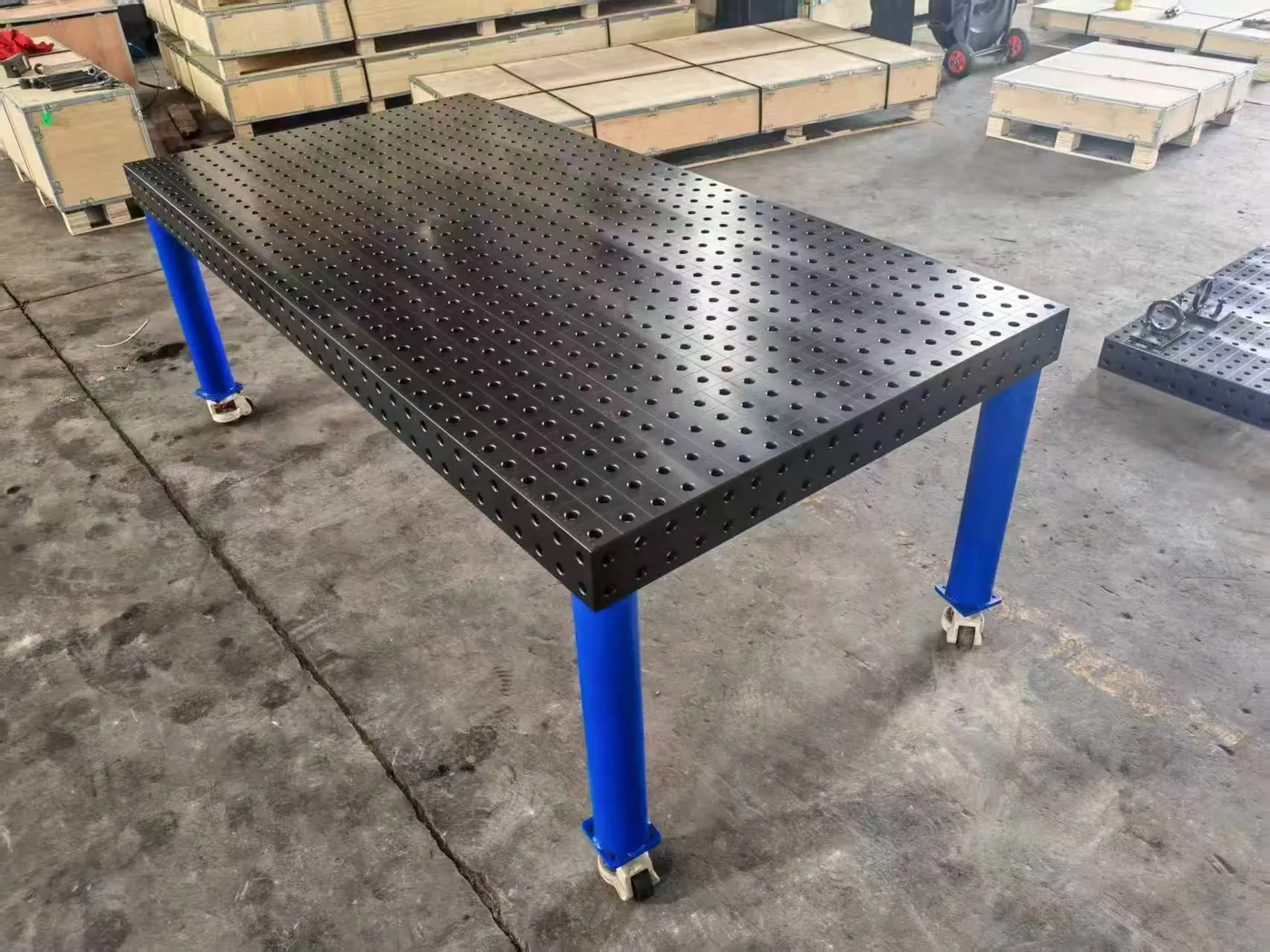
Large steel 3D welding table with machined hole grid in a workshop
6 min read

How to prepare an RFQ for a 3D welding table

An enquiry that gets an accurate quotation contains five things: the workpiece size and weight, the required hole system, the table size including the working height you want, the flatness grade, and the accessories needed. Send those and the supplier can quote a configuration instead of asking you to choose from a catalogue.

Read the guide
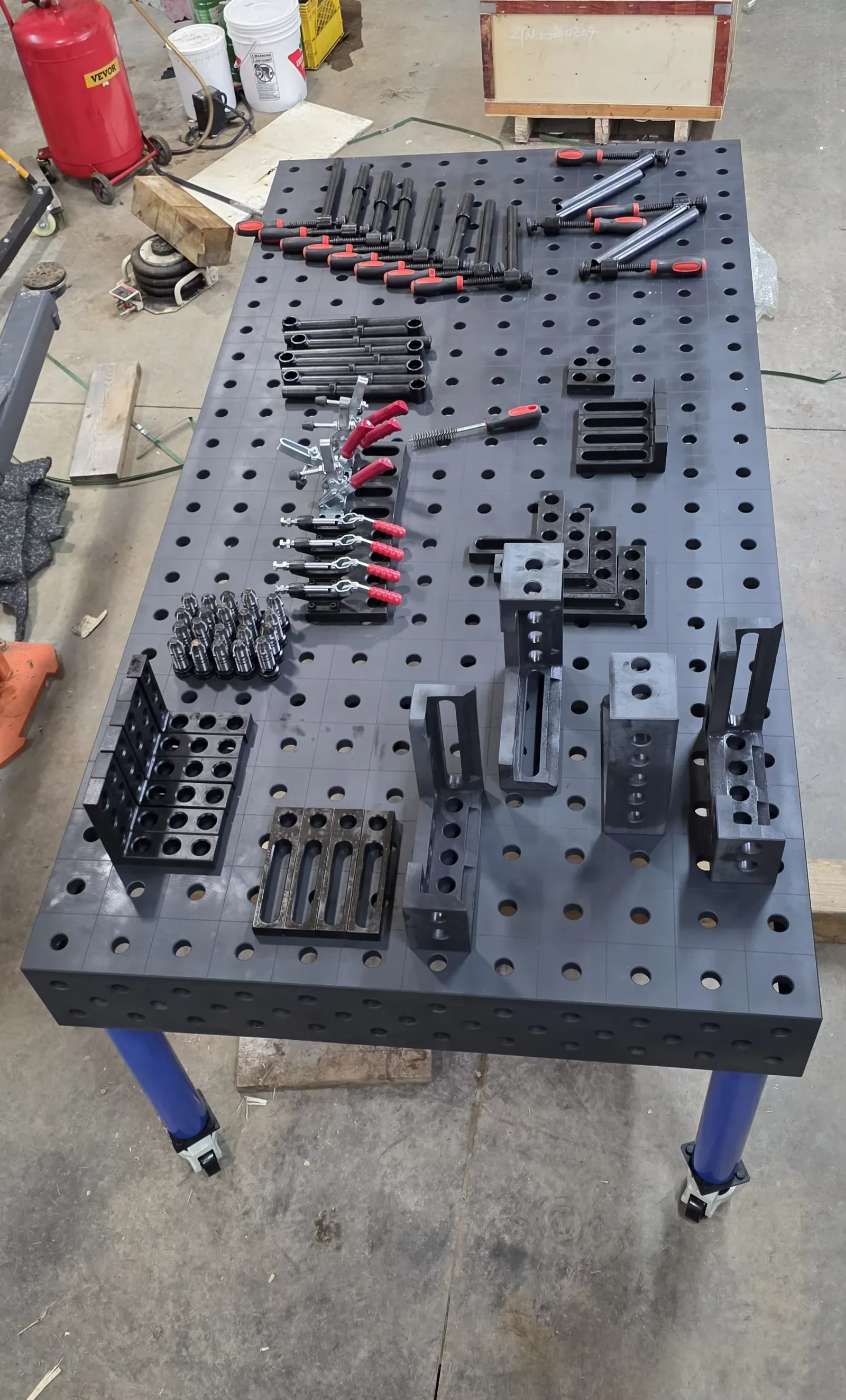
Modular clamps, stops and locating tools arranged on a nitrided welding table
5 min read

Which accessories to order with a welding table

A 3D welding table on its own is a flat, drilled surface — it cannot hold anything until tooling is added. Start with a kit covering clamping, squaring and connecting in matched sizes, then add single items once you know which operations repeat.

Read the guide

Have a workpiece in mind?

Turn your next setup into a repeatable system.

Request a quote