Fabricate the body
The platform is welded from steel plate — Q235 or Q355, with HT250, HT300 and other materials available on request — and internal reinforcement carries the machined working faces.
 WhatsAppRequest a quote
Manufacturing process
One workshop, six stages: fabrication, stress relief, shot blasting, five-face machining, inspection, treatment and packing. The sequence is the same for a stock-size platform and a custom weldment.
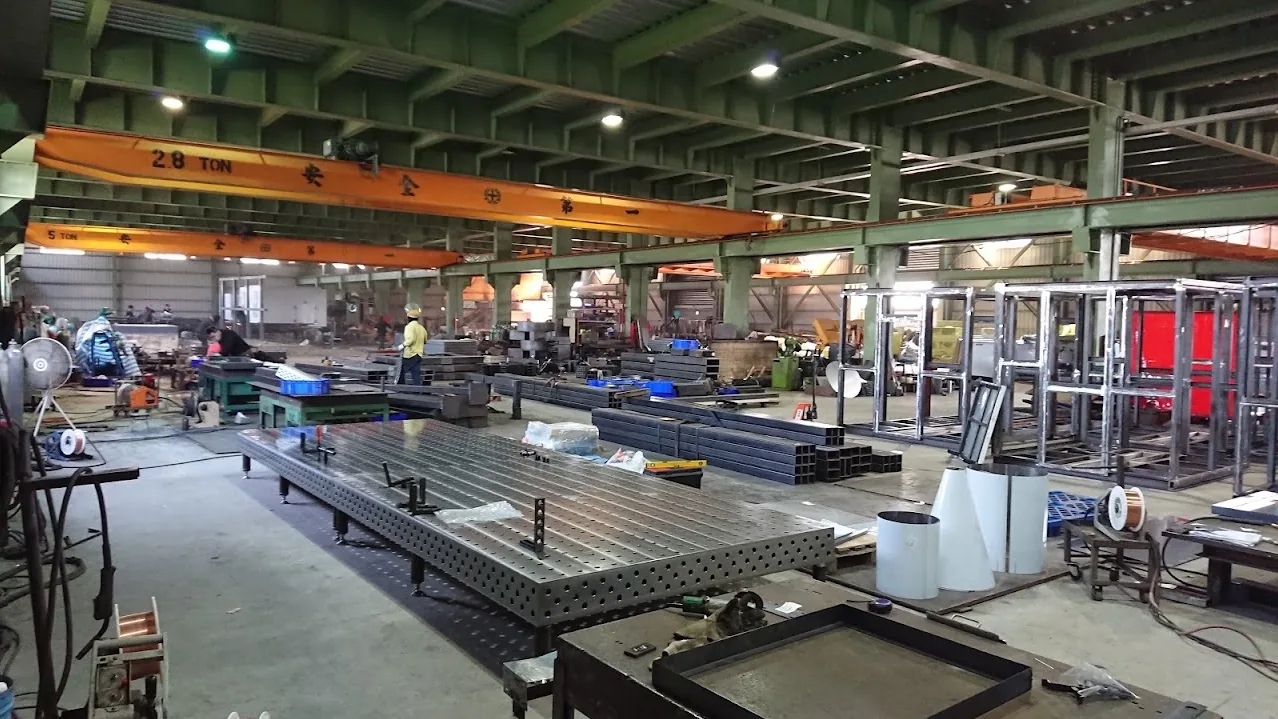
The six stages
Each stage is completed before the next begins, because every step depends on the one before it: machining only holds if the body has settled, and inspection only means something against the drawing already confirmed.
The platform is welded from steel plate — Q235 or Q355, with HT250, HT300 and other materials available on request — and internal reinforcement carries the machined working faces.
Welding leaves residual stress in the plate. Stress-relief annealing lets the structure settle before final machining, so the geometry machined into the body afterwards holds.
Shot blasting removes scale and leaves a clean, uniform surface, ready for inspection and the specified finish.
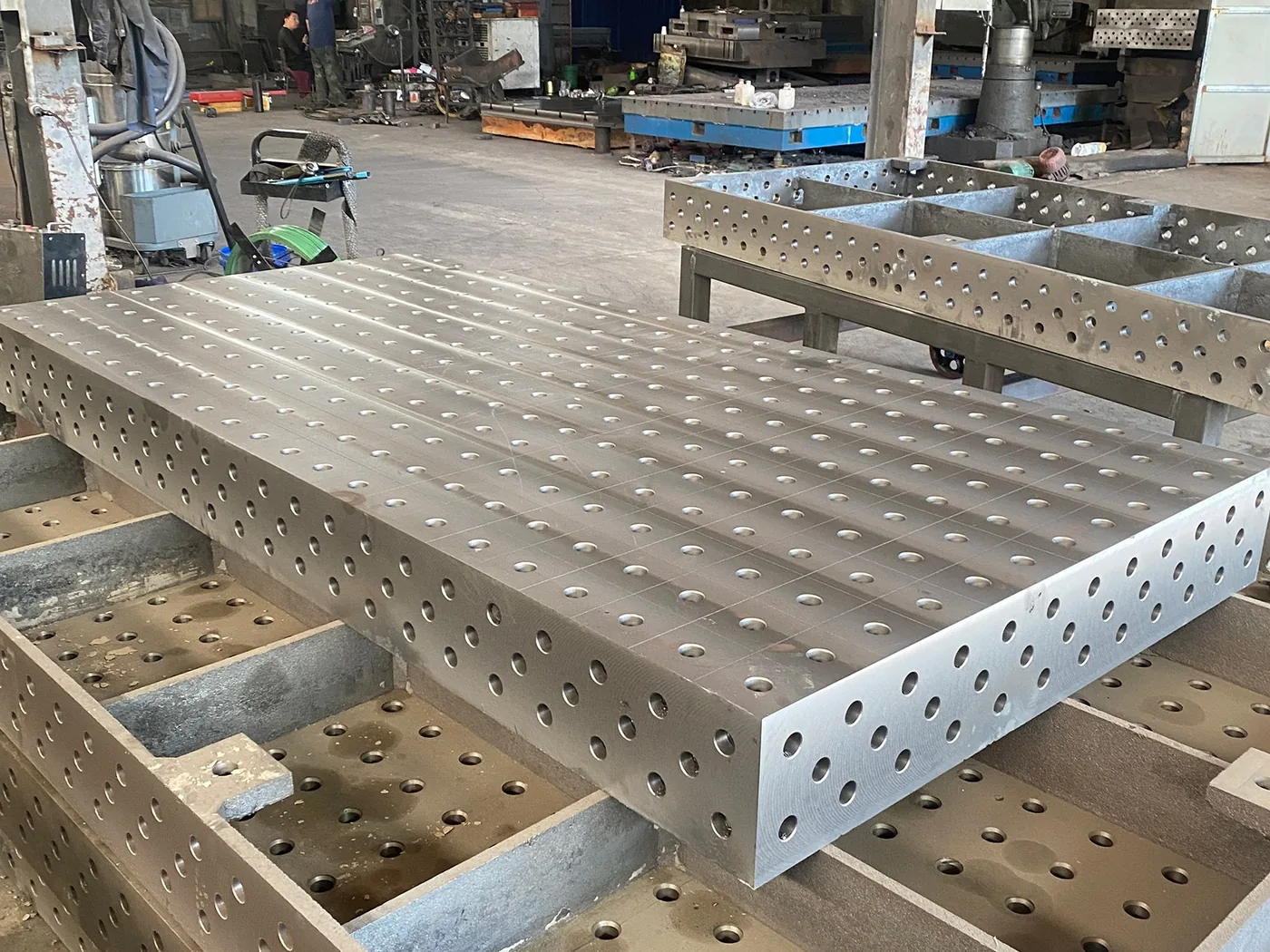
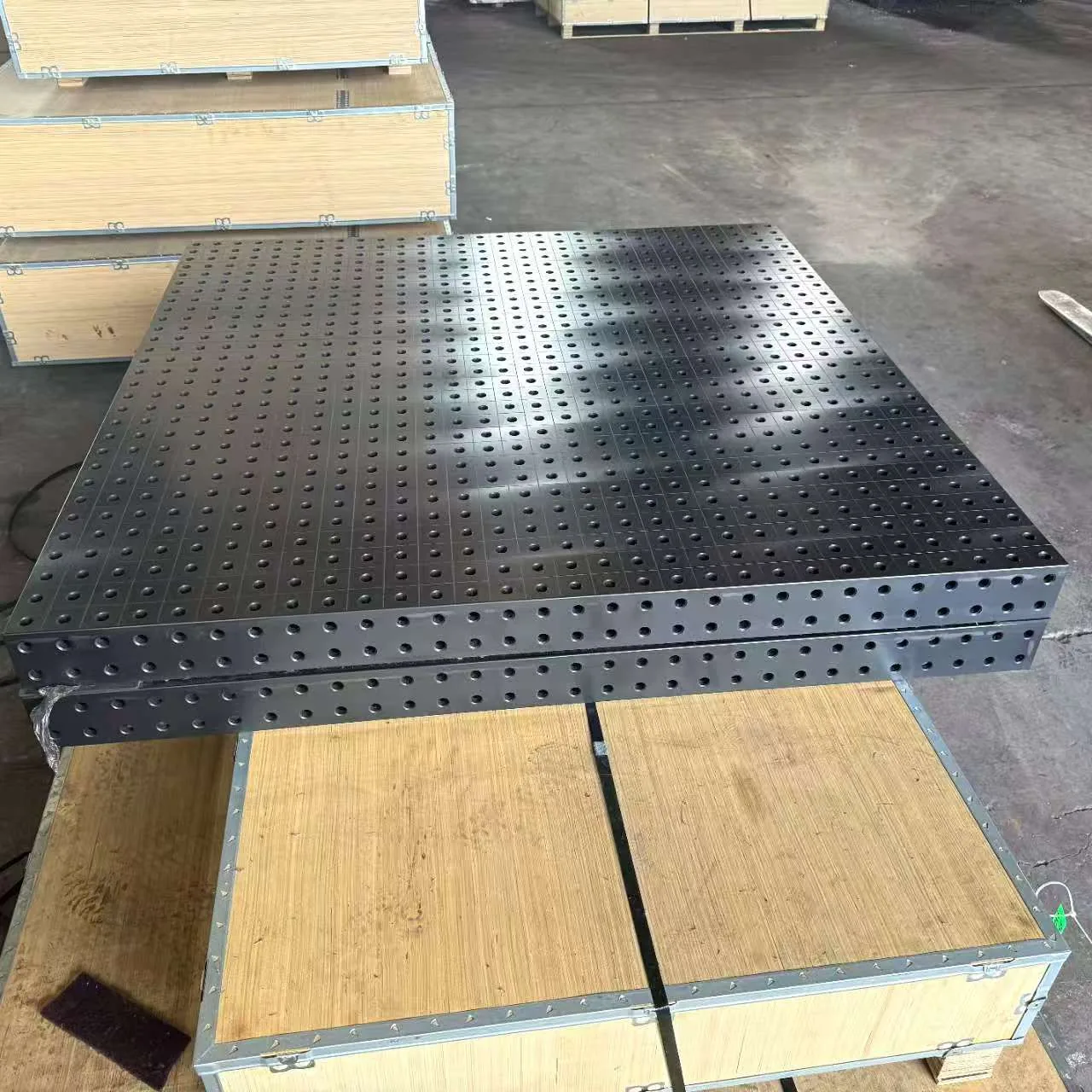
The top and four side faces are machined with the hole grid: D16, D22 or D28, at 50 or 100 mm spacing, in plain bore, metric M16–M24 or imperial hole types. Flatness follows the specified grade — 0.1, 0.05 or 0.02 mm/m².
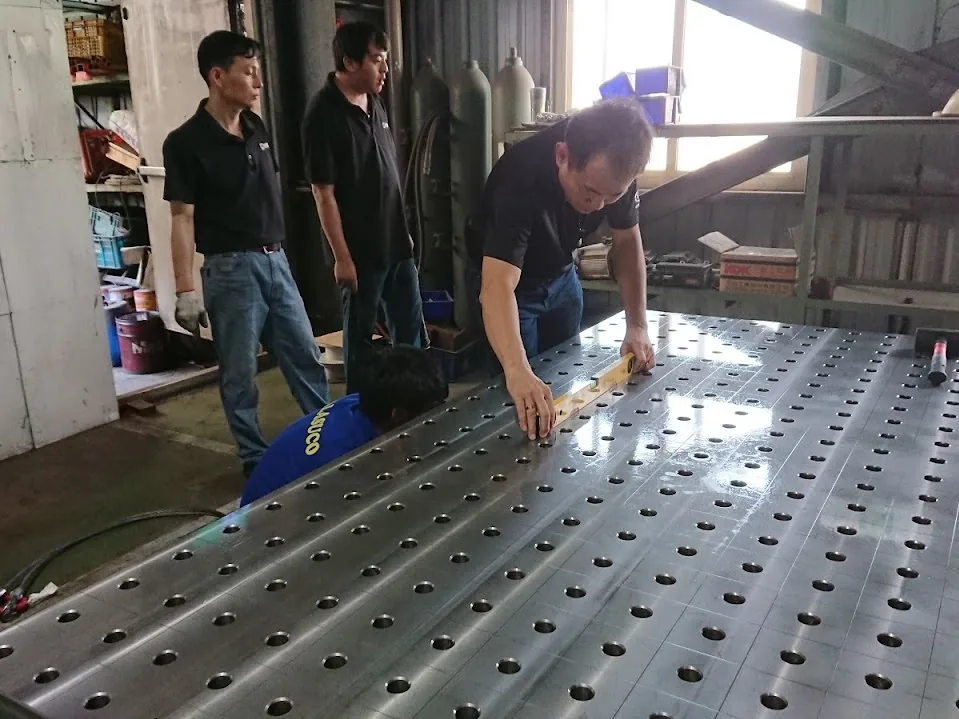
Before packing, the working faces and the hole grid are measured so the fixtures you order later fit the table you receive. What acceptance means is agreed at quotation.
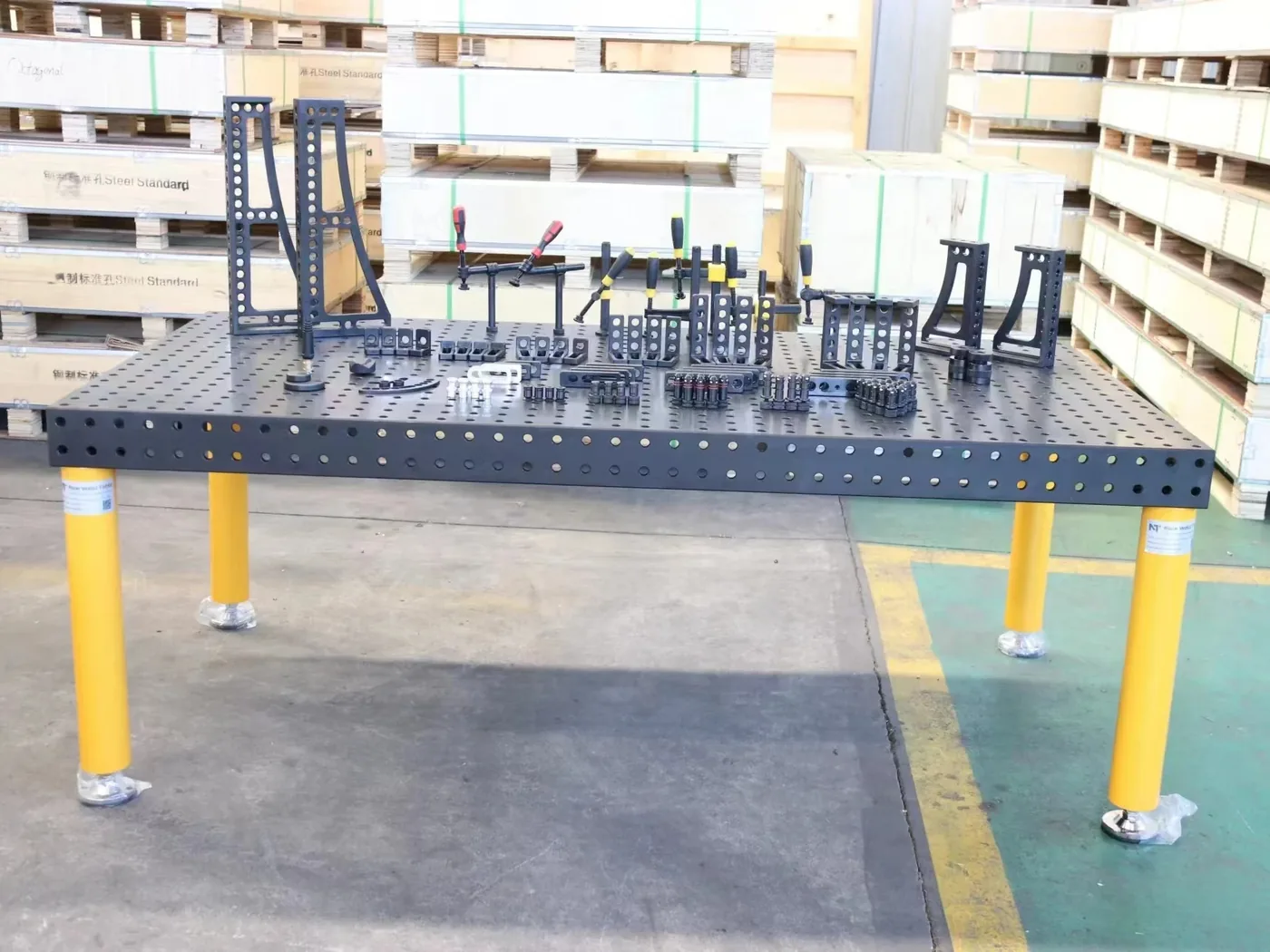
Rust-preventive oil, plasma nitriding or black oxide is applied — nitriding after machining, so the grid keeps its dimensions. Fixtures can be assembled and matched to the table, then everything is crated for export.
On video
Short clips filmed in the workshop — inspection, crating and a robotic cell working over a fixture table.
On the floor
Recent production in the workshop — no renders.
Why it matters
Configuration, hole system, flatness grade and surface treatment are fixed at quotation and carried through these stages. That is what makes later accessory orders fit: the grid you buy tooling for next year is the grid machined this month.
Send the drawing or the workpiece description, and the quotation covers the configuration these stages will build — hole system, flatness grade, treatment and fixture scope.
Send your requirementsHave a workpiece in mind?