D16 modular hole system

D16 welding tablesfor precision work

Ø16 mm holes on a 50 mm grid. Light to medium parts, jigs, frames and detail work.

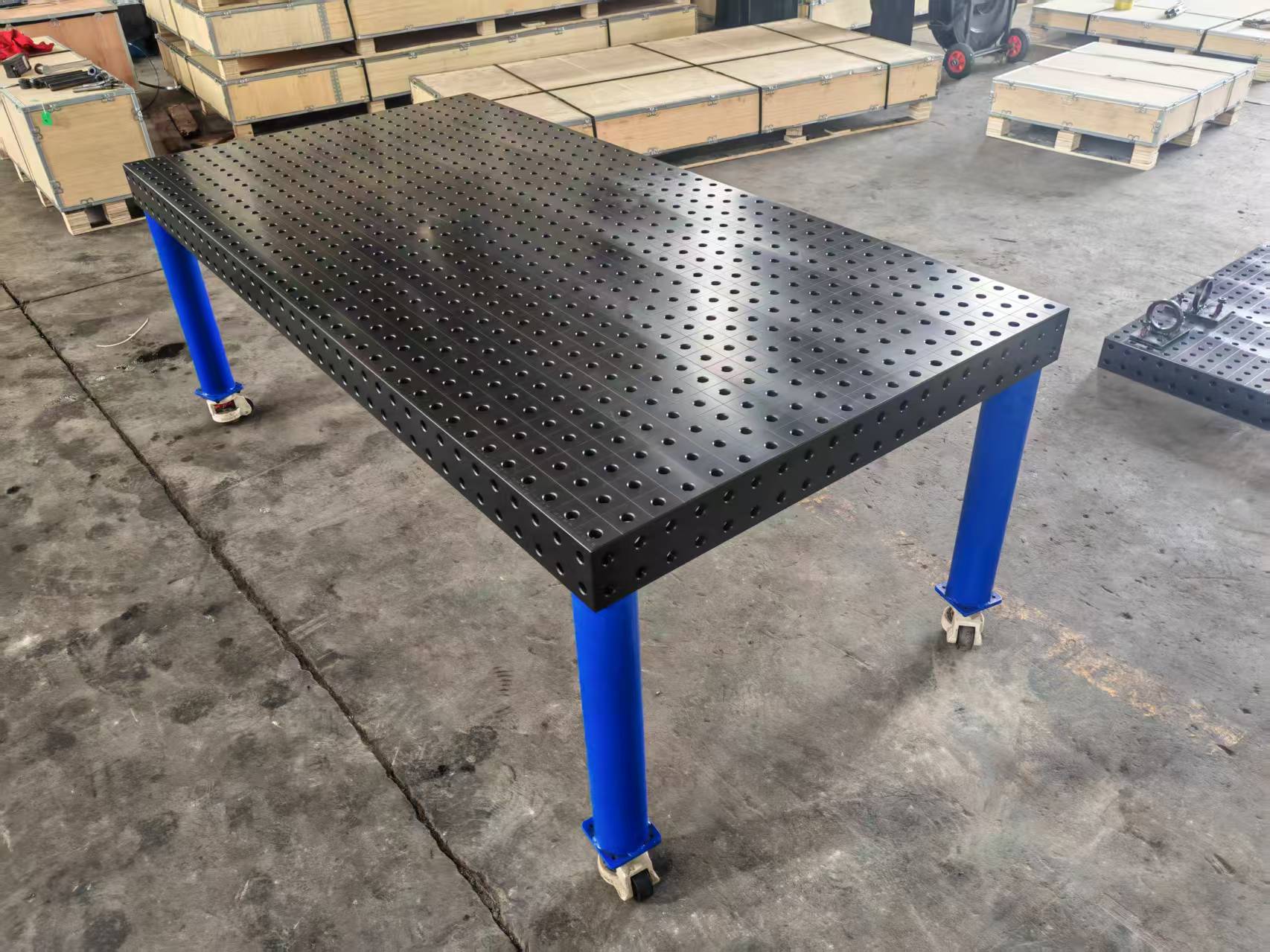
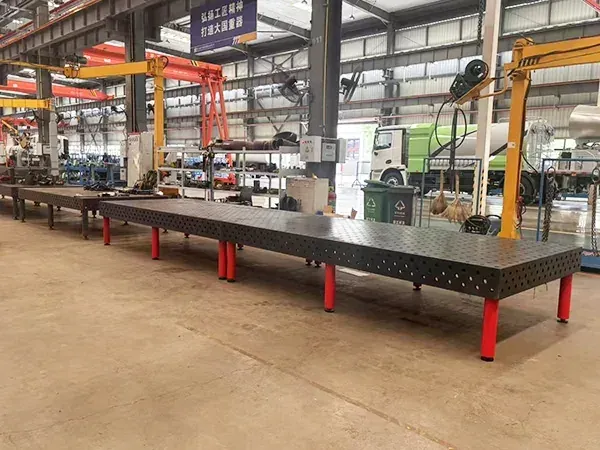
Black D16 welding table with a 50 mm hole grid and blue mobile legs in the BECO workshop

Why D16

Fine positioning for compact assemblies

A dense hole pattern for compact fixtures and precise sub-assemblies where space around the part is tight. Best when the workpiece is small enough that a fine grid helps positioning.

Choose D16 when the operator needs many nearby clamping positions around a small workpiece. The 50 mm grid makes it easier to place stops close to corners, tabs and narrow profiles without building an oversized fixture.

  • Hole diameter: Ø16 mm
  • Standard grid: 50 mm
  • Steel or nitrided steel platform options
  • Tooling matched to the Ø16 mm bore

D16 project profile

The workpiece and clamping load decide whether this is the right system.

Typical work
Light to medium parts, jigs, frames and detail work
Fixture plan
Compact clamps, low stops, small angle squares and quick-locking pins matched to the 16 mm bore.
Choose another
Move to D22 or D28 when the workpiece is heavy enough that clamping force and fixture stiffness matter more than close grid spacing.
Quote input
Drawing, size, weight, flatness, quantity and destination
Request a D16 configuration

Typical D16 work

Where this hole system earns its place

Examples are a selection guide. Final table construction and support are confirmed from the approved workpiece drawing.

01

Small frames and brackets

Locate short profiles, tabs and brackets while keeping clamps close to the weld joint.

02

Precision jigs

Build compact checking and assembly fixtures where repeatable stop positions are more useful than maximum clamp size.

03

Sub-assemblies

Fixture light machine parts and welded modules before they move into a larger final assembly.

Quote checklist

Configure the D16 3D welding table around the workpiece

This is a made-to-order modular welding fixture table, not one fixed stock model. The approved drawing sets the platform size, working height, surface, accuracy and matched accessory kit.

Use the checklist to give a welding table manufacturer enough information to review the configuration before quoting.

01

Workpiece envelope

Send the largest part dimensions and weight so the table area and support arrangement can be checked.

02

Positioning detail

Mark the edges, holes or faces used as datums so the 50 mm grid can be planned around the fixture.

03

Surface and flatness

Choose machined steel or nitrided steel and state whether 0.1, 0.05 or 0.02 mm/m² flatness is required.

04

Matched D16 tooling

List the clamps, low stops, angle squares and pins needed for the first repeatable setup.

Platform finish

Use the same hole system on either surface

Select the platform construction and treatment from production volume, wear and maintenance requirements.
Hole systems

D16, D22 or D28: pick the grid around the work

The hole system sets how much holding force the table gives you and how fine the positioning is. It is the first decision, because every clamp, pin and stop has to match it.
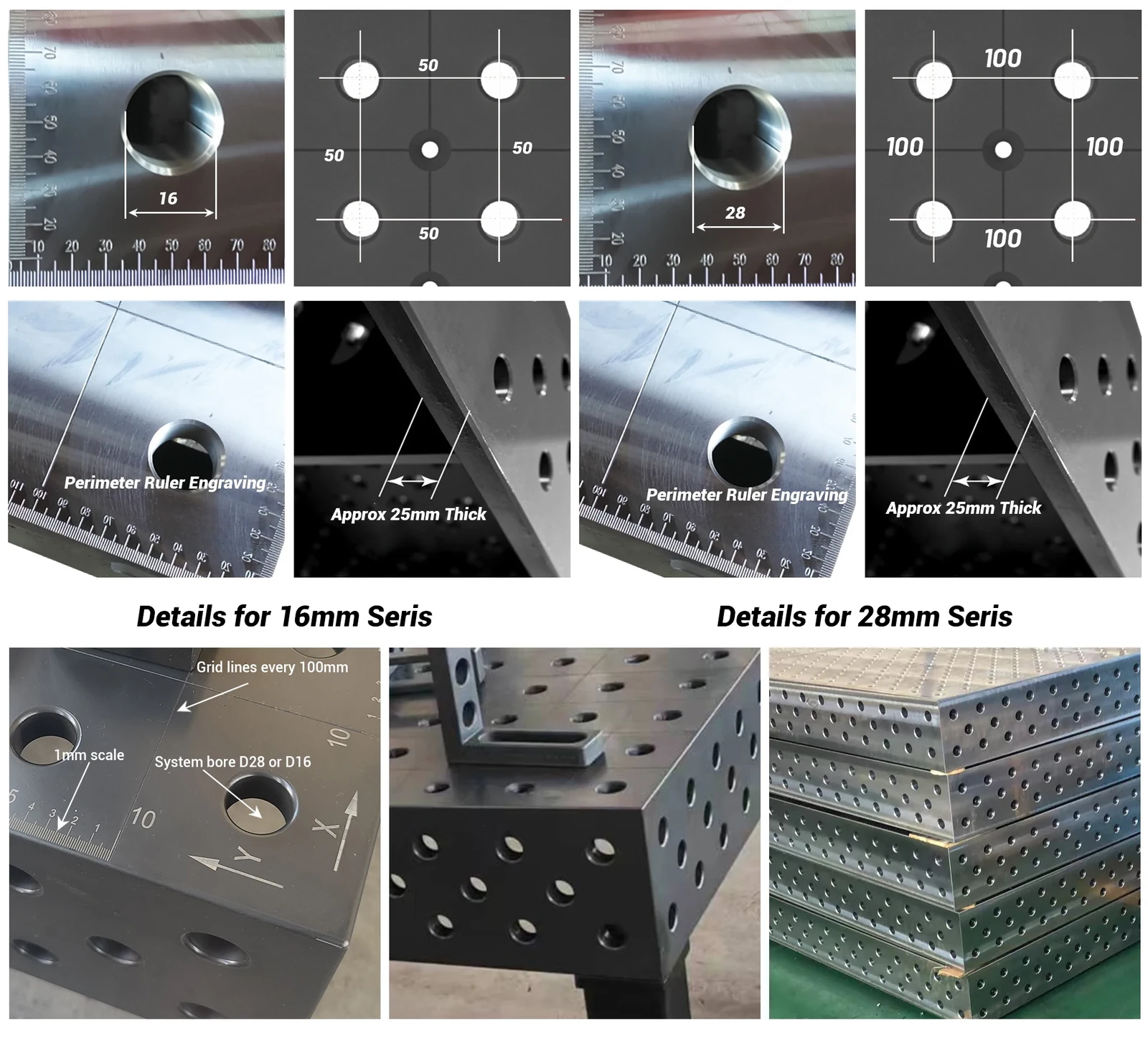
Close-up of 16 mm and 28 mm series welding table hole details

What actually changes between the series

Larger holes take larger pins and clamps, so a D28 table holds heavy structures more securely. Smaller holes let you place stops closer together, which helps small parts and tight geometry. The machined grid, hole spacing and flatness are set at the same time, so tell us the workpiece and we will match the system to it.

  • Grid spacing confirmed against the drawing
  • Plain bore matched to the selected system
  • Flatness from 0.1 mm/m² down to 0.02 mm/m²

Buyer guides

Confirm the specification before ordering

Use these practical guides to compare hole systems, surface requirements and the accessories needed for your work.

Close-up comparison of 16 mm and 28 mm welding table hole details
6 min read

D16, D22 or D28: choosing a welding table hole system

Pick the hole system from the workpiece, not from the table. D16 suits small parts, jigs and fine positioning. D22 covers mixed job sizes on one table. D28 is for large frames, thick plate and heavy structures where holding force matters more than a fine grid. If you are unsure, send the workpiece size and weight and the decision takes a few minutes.

Read the guide
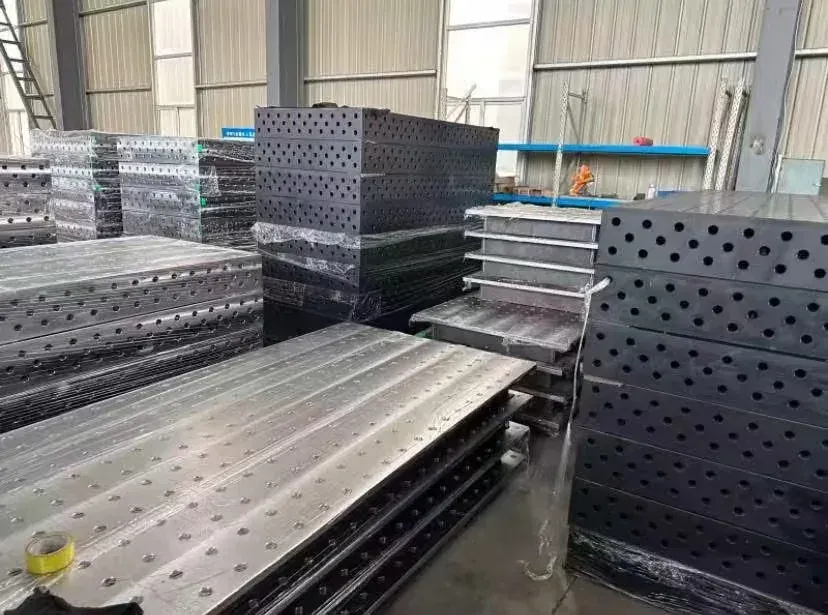
Large steel 3D welding platforms in several sizes prepared in the BECO workshop
7 min read

How to choose welding table size and working height

Start with the largest workpiece, then add clear space for clamps, stops and hands on every side that needs access. Choose the working height from the operator elbow height minus the workpiece and fixture stack above the table. Check the result against cranes, positioners, trolleys and seated work before fixing the leg or base height.

Read the guide
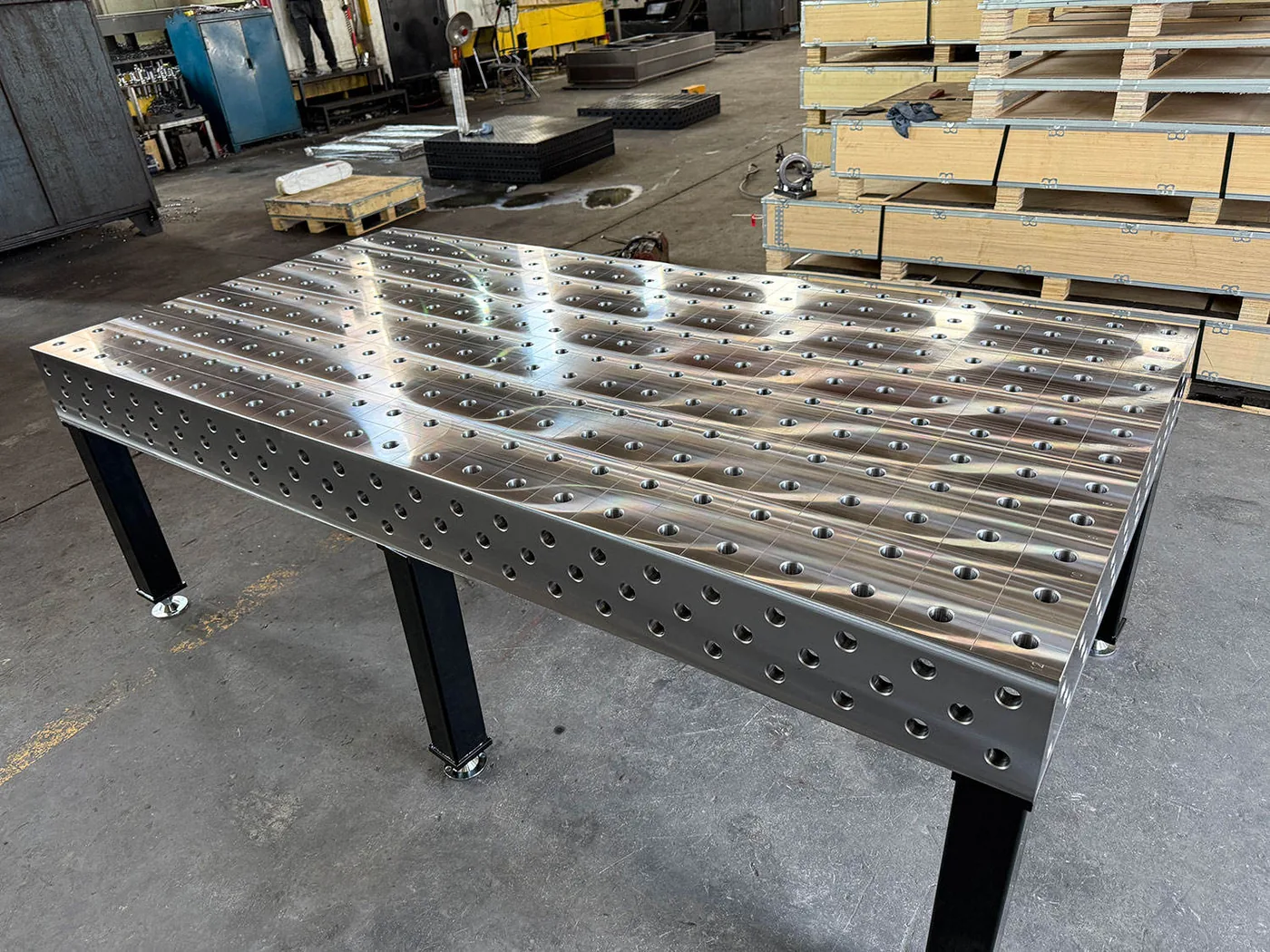
Machined steel welding table surface with a precision hole grid
8 min read

Welding table flatness: what 0.1, 0.05 and 0.02 mm/m² mean for your work

Flatness is specified as a deviation over a reference area, for example 0.1 mm per square metre. Standard tables are machined to 0.1 mm/m², precision to 0.05 mm/m² and high precision to 0.02 mm/m². Choose the grade from the tightest tolerance on the assembly being built, not from the tightest figure available, because each step up costs machining time.

Read the guide
Read all buyer guides

Questions

D16 welding table questions

If your question is not here, send it over — practical answers are usually faster than a specification sheet.

Why does the D16 table use a 50 mm grid?
The closer grid gives more positioning choices around small parts. Stops and clamps can be placed near compact geometry without requiring a large fixture plate.
Is D16 suitable for heavy structural frames?
D16 is intended for light and medium work. For large frames, thick plate or high clamping loads, D28 is normally the better starting point.
What should I send for a D16 quotation?
Send the workpiece drawing, overall dimensions, weight, required working area, flatness requirement and the number of clamps and stops you expect to use.
What sizes and surfaces are available for a D16 3D welding table?
BECO tables are configured from 500 × 500 mm up to 4000 × 2000 mm, subject to the approved drawing. D16 platforms can be supplied as machined steel or with plasma nitriding, with the support and working height selected for the job.

Have a workpiece in mind?

Turn your next setup into a repeatable system.

Request a quote