
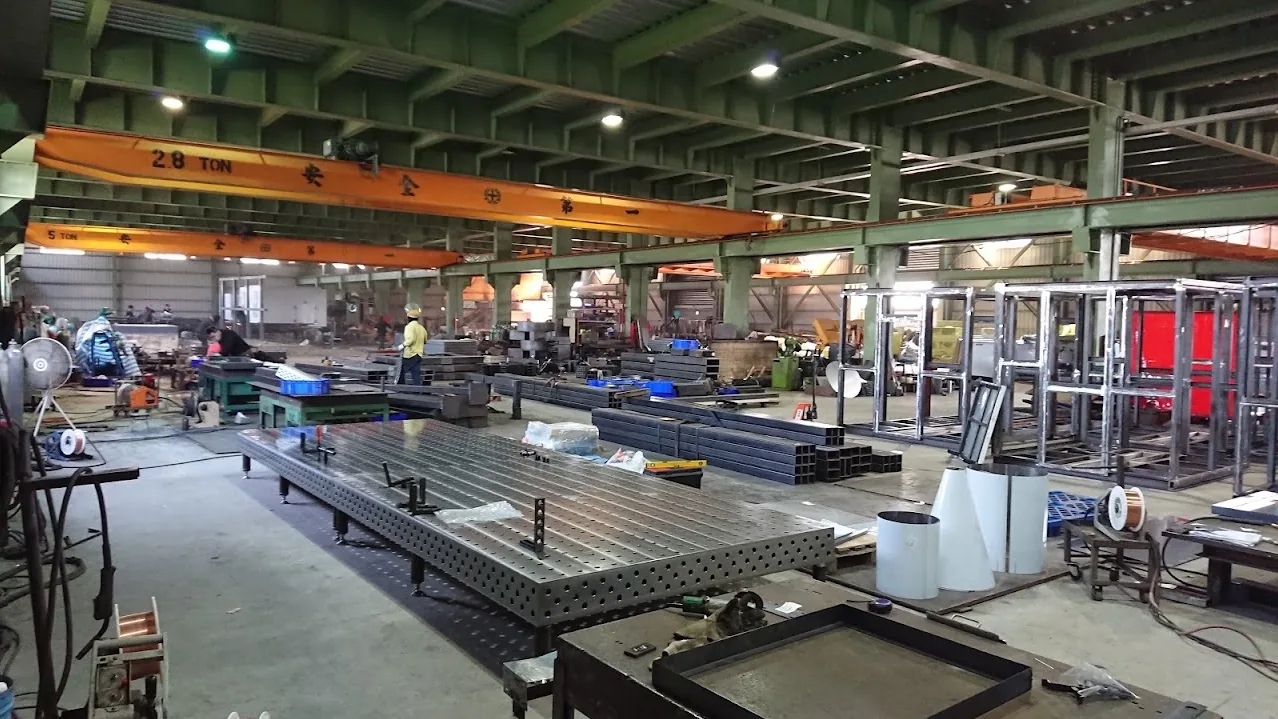
Where D36 sits in the range
Four hole diameters are available: 16, 22, 28 and 36 mm. The ladder is about tooling scale — each step up accepts larger pins, larger clamps and heavier fixturing. D16 serves compact parts and fine positioning; D22 covers mixed fabrication; D28 is the heavy general-purpose system for frames and thick plate; D36 is the top of the range for the heaviest work.
What does not change across the ladder is the principle: the hole system has to match across the table and every accessory. A D36 grid accepts D36 tooling, so the accessories are specified to the same system at quotation.
What the bigger hole changes
- Tooling scale: the pins and clamps that fit a 36 mm hole are the largest in the range, matched to heavy clamping loads.
- Grid density: larger holes mean a coarser grid, so positioning density decreases as diameter increases.
- Best fit: large frames, bases and structures where holding force and rigidity matter more than fine positioning.
Choosing between D28 and D36
The two heavy systems overlap in the kind of work they serve, so the decision usually comes down to the clamping plan on the largest workpiece. Sketch the part in its welding position and mark where the big holds must go. If a D28 clamp plan covers the part with margin, D28 is the more versatile choice — its grid is denser and the accessory range broader. If the clamp plan calls for larger tooling than a 28 mm hole accepts, that is D36 territory.
Shops that run both medium frames and occasional very heavy structures sometimes settle on D28 for the general station rather than splitting the difference with two tables. The workpiece list decides; the hole system follows it.
What to confirm on the enquiry
- The workpiece: largest frame or base, thickness range, and the clamping points the setup needs.
- The tooling: whether existing accessories must fit, or a kit is ordered with the table.
- The grid: 50 or 100 mm spacing alongside the 36 mm diameter.
- The grade: flatness specified from how the table will be used, confirmed at quotation.
How the recommendation is made
No one specifies D36 from a catalogue page — it comes from the work. Send the workpiece description or drawing and the recommendation covers the hole system, the grid, the table size and the flatness grade with the reasoning, so the configuration can be checked against your requirements before production. Delivery is typically around 10 days from confirmation.