
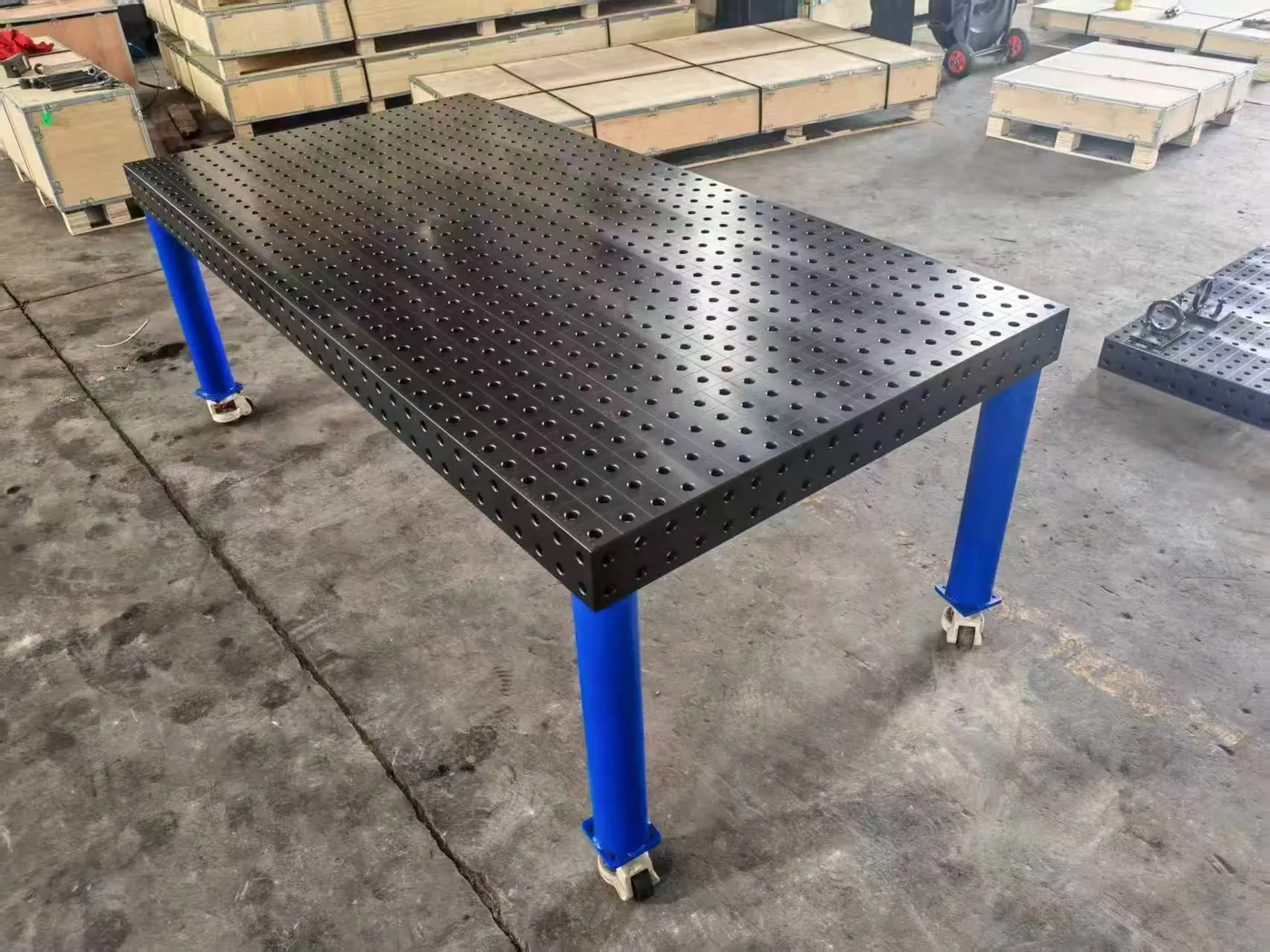
The process in one paragraph
The table is machined first. It is then held at temperature in a nitrogen-bearing atmosphere, and nitrogen diffuses into the surface of the steel. The result is a hardened case that is part of the material rather than an applied layer. In our tables the nitriding hardness range is HV450 to HV630.
Because the treatment follows machining, the hole grid and the working faces keep their dimensions. You are not choosing between a machined surface and a nitrided surface — the surface is machined, and then nitrided.
What it changes in daily use
- Wear at the hole grid. Clamps and pins are inserted and removed constantly, and that is where a table loses accuracy first. A hardened surface resists that wear.
- Wear on the working faces. Parts being dragged, tacked and clamped mark a soft surface over time.
- Glare under shop lighting. The dark surface reflects less light than a bright machined finish, which some operators prefer when working over the table.
- Corrosion resistance. The treated surface is less prone to surface rust than an untreated machined face, though the table still benefits from normal care.
When a machined surface is enough
Nitriding adds cost, so it is not automatically the right answer. If the table is used occasionally, or for light work with modest clamping force, a milled or ground surface is sufficient and the money is better spent on the correct hole system or on tooling.
The case for nitriding is strongest where the table is a production asset: a fixture station used every shift, where clamping is frequent and the table has to hold its accuracy for years. There the wear resistance pays for itself by postponing the day the grid has to be reworked.
Questions worth asking a supplier
- Is the treatment applied before or after machining? After machining means the grid keeps its dimensions.
- Is it nitriding or a painted or coated finish? A coating can chip and is a different proposition entirely.
- What hardness range is achieved? Ours is HV450 to HV630; another supplier may differ, so ask for the figure.
- Which surfaces are treated? Working faces and holes are the ones that matter.