
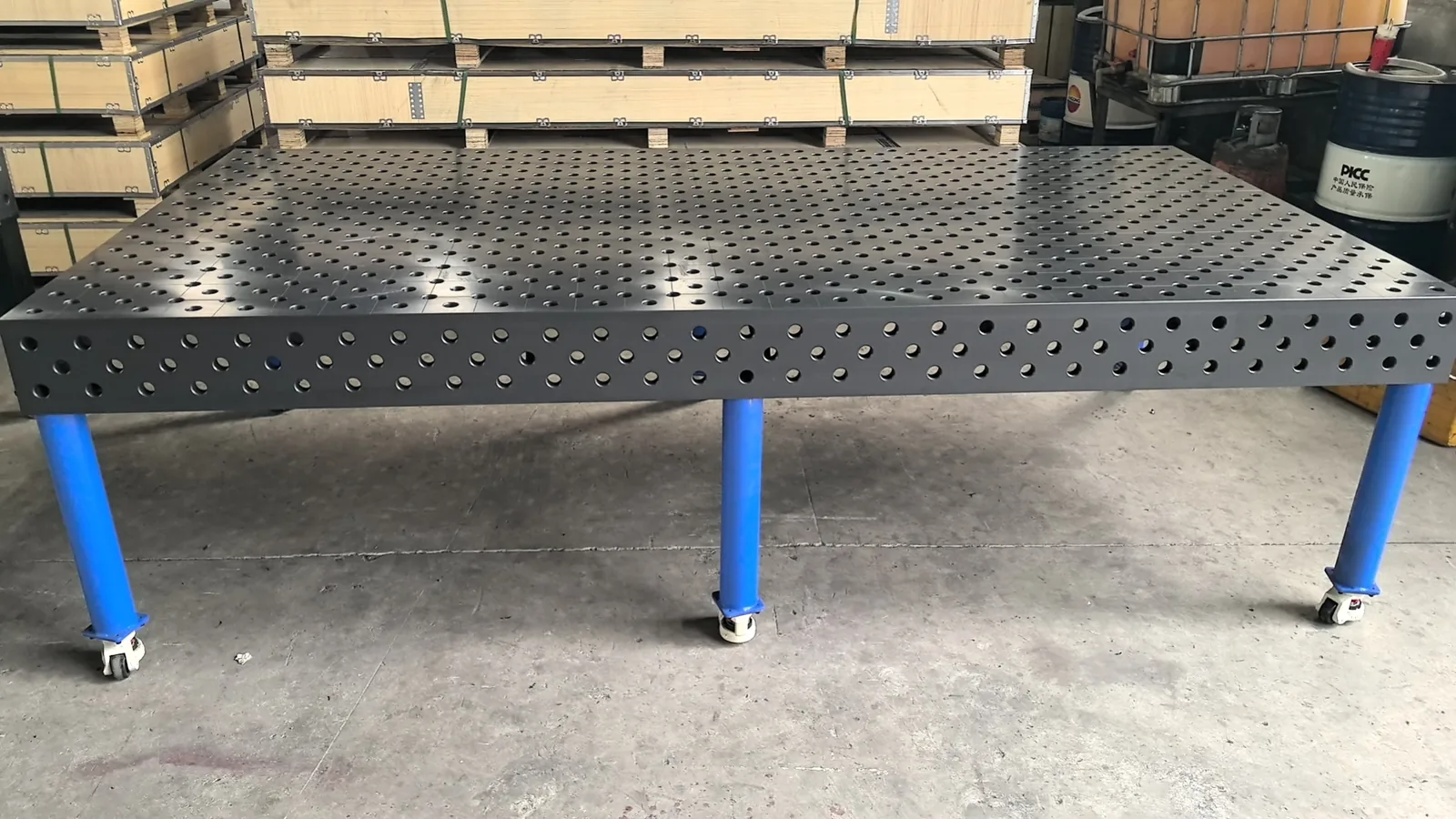
The hole grid is the working interface
A 3D table holds parts through its holes: pins seat in them, clamps lock to them, stops reference them. That makes the hole edges the most valuable machined feature on the table — and the most exposed. A hole blocked by spatter stops a pin from seating fully; a hole edge dinged by a careless tool no longer locates at its nominal position; a surface that rusts pits slightly and drags on every part laid on it.
None of this happens all at once. Accuracy drifts as thousands of small damages accumulate, which is exactly why maintenance is easy to postpone — the table still works tomorrow. The routine below costs a few minutes a shift and protects the feature the whole fixture system depends on.
Before the arc: spatter control
- Apply anti-spatter spray to the table surface and to clamps, stops and pins near the joint, so spatter lands on a release film rather than on bare steel.
- Keep the spray off the parts where finish matters, and wipe excess before welding — anti-spatter is a work aid, not a surface finish.
- Tune the process at the trim: excessive spatter usually signals parameters or wire issues worth fixing at the source rather than cleaning up afterwards.
- Expect more spatter with certain joints and positions. Overhead and vertical-up work throws more, so those setups deserve a heavier film before starting.
After welding: clean before the next setup
Spatter that comes off the same day brushes or chips off easily; spatter that bakes on for a week takes the surface with it. Clean while it is fresh, and pay particular attention to the holes — a cleaning brush and a bit of patience on the grid costs less than one pin that will not seat during an urgent job.
Avoid digging at hole edges with hardened scrapers or screwdriver tips. The machined edge is what locates the pin; a gashed edge is permanent damage in exchange for a shortcut. If spatter has bridged a hole, soften it first rather than levering it out.
Between shifts: protect the machined faces
Bare machined steel rusts, and rust pits the reference surface. Surface protection oil on the tabletop and side faces is the standard defence — the same maintenance family that supplies anti-spatter spray and brushes supplies it, so the habit has no procurement excuse. A table that sits idle over a weekend or a holiday gets a film of oil before it is left.
Surface treatment changes the intensity of this, not the fact of it. A nitrided surface is less prone to rust and far more resistant to wear at the hole grid, and black oxide similarly slows corrosion — but both still benefit from oil when idle and from cleaning in use. The treatment buys tolerance, not immunity.
A routine that fits most shops
| When | What | Why |
|---|---|---|
| Start of shift | Wipe the surface; test-seat a pin at the datum holes you will use | Confirms the positions the job depends on are clear |
| During welding | Anti-spatter on surface and tooling near the joint | Keeps spatter from bonding to bare steel |
| End of welding | Brush off spatter; clear the holes that were used | Fresh spatter removes easily; baked spatter does not |
| Before idle time | Oil the working faces | Machined steel rusts when left bare |
| Weekly | Walk the grid with a pin; check clamps and stops for wear or damage | Catches drift while it is still a cleaning job, not a rework |
What wear looks like, and when to act
The first places a table shows wear are predictable: hole edges at the positions used most, clamp seats, and drag marks on the top face where parts slide. Occasional light marking is cosmetic; what matters is fit — if a pin that once seated snugly now rocks, the locating position has changed and parts built from it inherit that change.
When that happens, stop adjusting around it. Check the surface against the original flatness grade, identify whether the damage is localised or general, and agree the remedy with the supplier before any rework. A hardened nitrided case delays this conversation by years on a busy station, which is what the treatment is for.