
How to read the number
A flatness figure of 0.1 mm/m² means that over a one metre square reference area, the machined surface does not deviate from a true plane by more than 0.1 mm. It is a local flatness specification, not a statement about the whole table at any size.
This distinction matters when a table is long. A 4000 mm platform is not judged as a single 4 metre by 2 metre plane with one overall figure; flatness is assessed over reference areas across the surface. When you compare quotations, check that both suppliers are quoting the same reference area, or the numbers are not comparable.
Which grade fits which job
| Grade | Deviation | Typically specified for |
|---|---|---|
| Standard | 0.1 mm/m² | General fabrication, frames, bases and routine welded assemblies |
| Precision | 0.05 mm/m² | Assemblies with a defined position tolerance, jigs and repeat fixtures |
| High precision | 0.02 mm/m² | Tight-tolerance work where the table surface is part of the measurement reference |
Why over-specifying costs you
Flatness is produced by machining, and holding a tighter tolerance takes more passes and more inspection time. If the assembly being welded has a tolerance of plus or minus 0.5 mm, paying for a 0.02 mm/m² surface does not improve the finished part — the welding distortion is an order of magnitude larger than the surface deviation.
The grade is worth paying for when the table is used as a reference: when you are checking a part against the table, setting up a jig from the table datum, or building an assembly where stack-up tolerance is already tight. In those cases the surface deviation contributes directly to the result.
What else affects the result
- Plate thickness. A 100 mm plate and a 250 mm plate behave differently under the same load, and a thicker plate resists local deflection at clamping points.
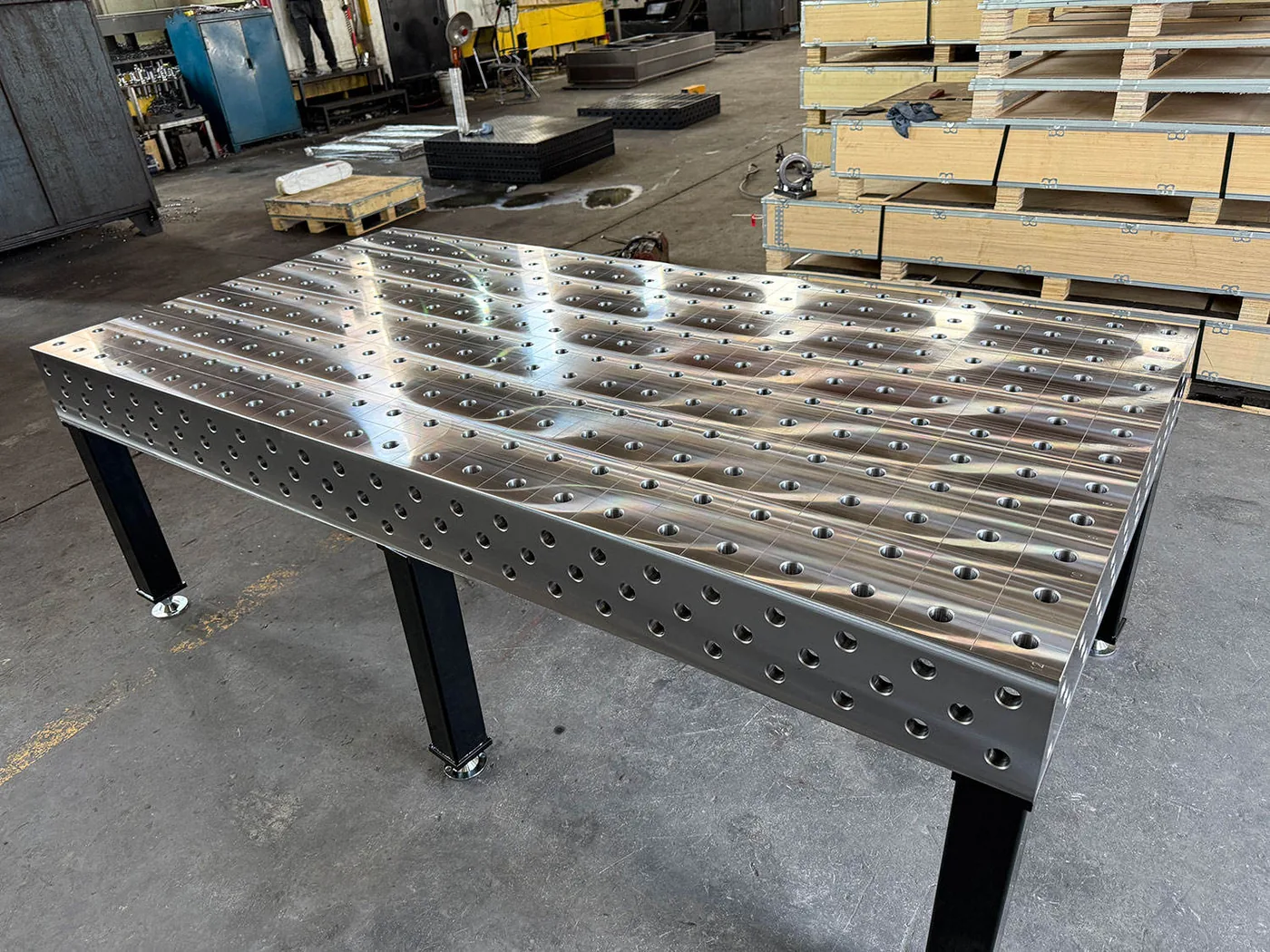
- Support arrangement. How the table is supported, and how level the floor is, affects how the surface sits in use. Levelling feet allow the table to be brought into level after positioning.
- How you use the table. Heavy parts concentrated on one area, or clamping that pulls the surface, influence the working accuracy more than the delivered grade on its own.
Specifying it on an RFQ
State the grade together with the reference area, the table size, the plate thickness and the hole system. That combination is what a supplier needs to quote a real price. A request that only says "flat table" usually comes back with the standard grade, which may or may not be what the job needs.