
What a batch order means here
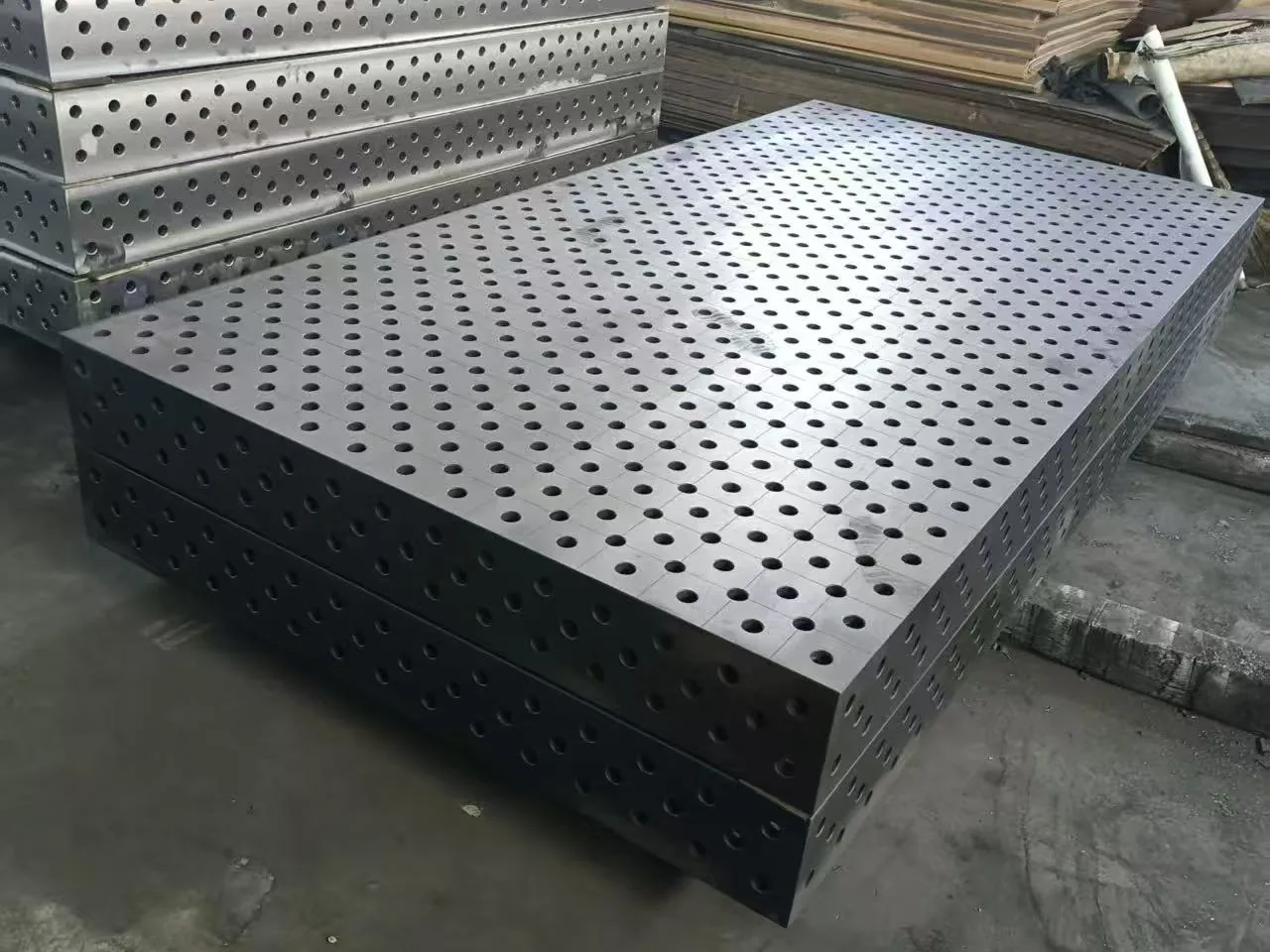
Most platform orders are not one table. A production line takes a set of stations, a reseller takes stock, an integrator takes cells — and in every case the requirement is the same: the second table has to behave exactly like the first. That is what a batch is here. One drawing is confirmed, and every table in the batch is built to it: same hole system, same spacing, same grid faces, same flatness grade, same treatment.
The confirmation happens before production, and the batch is built against that drawing rather than against a work in progress. What arrives is a set of platforms that are interchangeable in every dimension that matters downstream.
Why batch consistency matters downstream
- Tooling: a clamp kit sized to the batch hole system fits any table in the set, so spares and additions are order-and-go.
- Fixtures: a fixture built on one table transfers to another without re-squaring from scratch.
- Programs and standards: offsets and setup sheets written against one table hold on its siblings.
- Replacement planning: a damaged table can be replaced with a like-for-like build from the same confirmed drawing.
Planning a batch
Start from the station list: how many tables, which sizes, which hole system each needs. Standard models run from BECO-1000x800 up to BECO-4000x2000, and custom sizes are available to 4000 x 2000 mm. A batch is usually one configuration repeated; if the stations need different sizes, each configuration is quoted and confirmed on its own drawing so nothing is assumed across the set.
Surface treatment is chosen once for the batch — a production line wants its tables to age the same way. Platform heights of 100 or 200 mm, with custom heights, are confirmed with the configuration.
For resellers and integrators
Quoting the accessories with the batch is the better structure. Clamping, locating, connecting and support families are available as kits matched to the hole system, so quoting them together means every table can ship with a matched kit and nothing needs exchanging on arrival. For integrators building cells, stating the workpiece and clamping plan lets the kit be sized to the actual jobs rather than guessed.
Resellers taking stock for resale get the same consistency benefit from the other side: every table in stock follows the same specification sheet, so customer quotes and after-sales documentation stay simple.
How a batch is confirmed and produced
The flow is the same as for a single table, scaled: send the station list or workpiece descriptions, receive a proposal covering every configuration in the batch, confirm the drawings, and production runs. Delivery is typically around 10 days from confirmation, per configuration — larger batches are staged against the schedule agreed at quotation.