
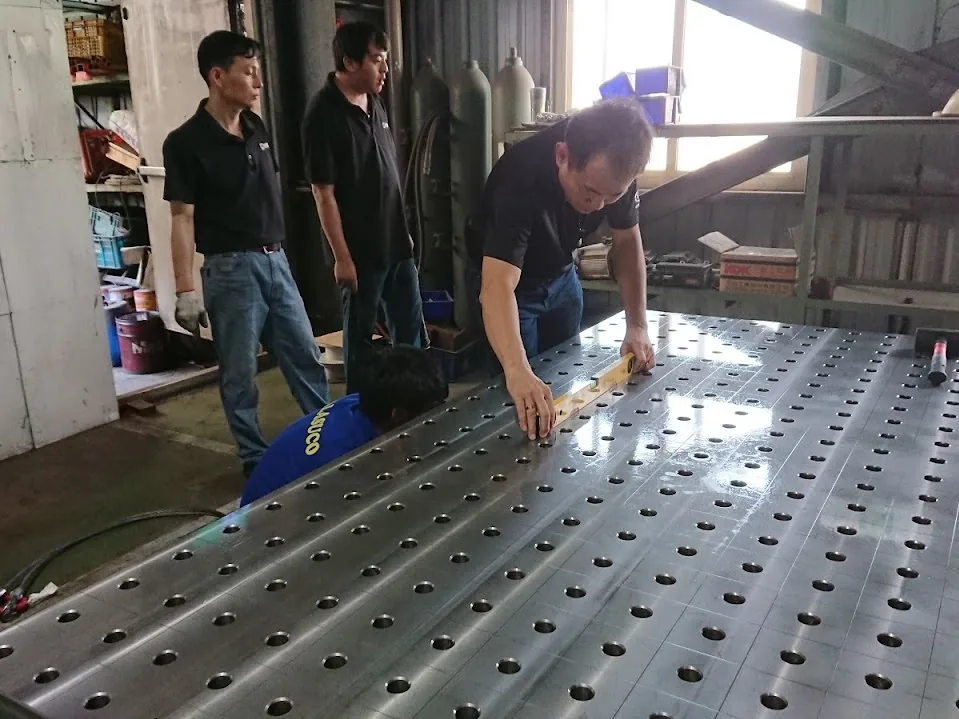
The three hole types and what mounts in each
The hole type does not change what the table is — the diameter, spacing and grid across the five faces stay as specified. It changes what goes into the hole, which is why it has to match the accessory range you intend to build with.
| Hole type | What mounts in it | Suits |
|---|---|---|
| Plain bore | Pins, locating elements, clamp systems that seat in the hole | Positioning-driven setups built around pins and stops |
| Metric thread (M16-M24) | Threaded studs, bolts and threaded accessories | Setups that clamp through the hole itself |
| Imperial thread | Imperial-thread tooling | Shops standardised on imperial accessories |
Matching tooling you already own
If the new table has to work with tooling from an existing station, identify three things about that tooling: the shank or thread size, the hole diameter it was made for, and the hole spacing it assumes. There is no single global standard across brands, so measure rather than assume — a calliper on the shank and a count of holes per 100 mm answers most of it.
Send the make and model if the tooling is documented; the fit can be checked before you order, which is far cheaper than exchanging a kit after arrival.
Threaded or plain: the practical difference
Plain bores are the general-purpose choice for modular systems: pins seat in them for locating, and clamp systems lock against the hole walls. Threaded holes suit accessory styles that clamp through the hole with a stud or bolt.
The honest way to choose is to work backwards from the accessories. Decide the fixture style you will run — pin-and-stop, threaded clamps, or a mix — and the hole type follows. Mixing styles on one table is possible when specified, so state what you intend to mount rather than guessing.
When systems do not match
A hole type mismatched to the accessories means orders get corrected after the quotation, and a mismatched table means tooling that cannot be used at all. The same applies across brands: imperial accessories will not seat in a metric threaded hole, and a D28 pin will not fit a D22 bore. Confirming diameter, spacing and hole type together at quotation is what prevents the exchange cycle.
Specifying hole type on the enquiry
Those four lines are enough for a quotation that arrives correct the first time. If the workpiece description is easier, send that and the recommendation covers the hole specification with its reasoning.
- The hole diameter: 16, 22, 28 or 36 mm.
- The spacing: 50 or 100 mm.
- The hole type: plain bore, metric M16-M24, or imperial thread.
- The tooling it must work with: existing accessories, or a kit ordered together with the table.