
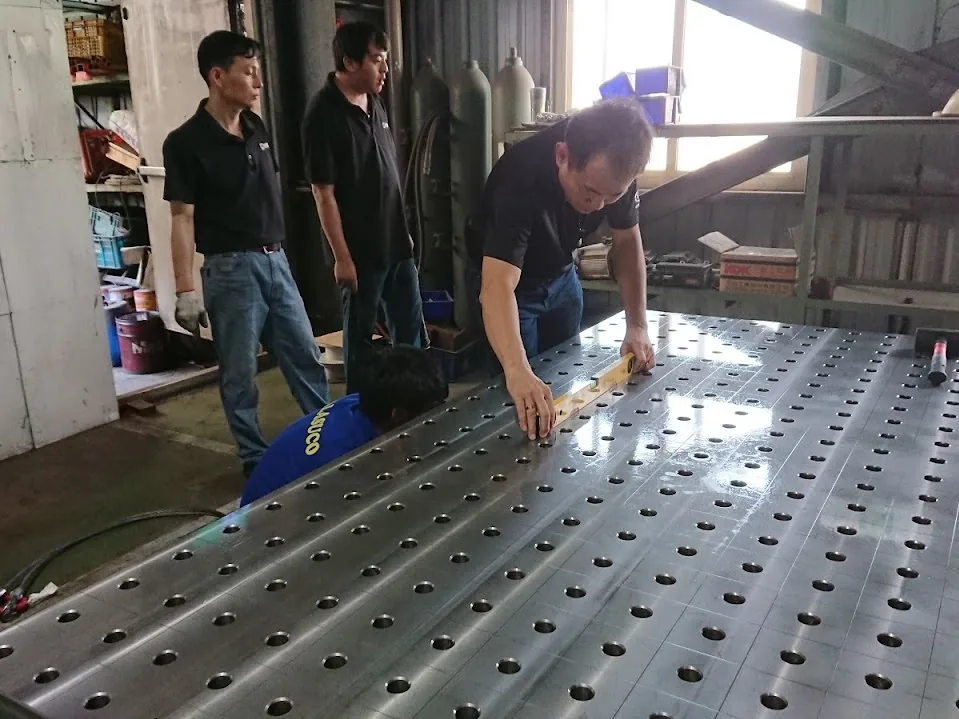
Why level matters on a machined surface
The flatness grade on a quotation describes the surface in its supported, levelled condition. Stand the same table out of level on an uneven floor and the surface deforms to its supports — the grade is still in the steel, but the geometry in front of the operator is no longer what was machined.
Level also feeds everything done on the table. Parts checked against a level surface carry that reference into the assembly; fixtures set square to a level table stay square. This is why levelling is one of the common errors called out in the flatness guide: measuring a table that has not been levelled says nothing about the grade.
What you need
- A precision or electronic level — practical on long tables and for checking how the table sits once installed.
- Access to every levelling foot, with the table unloaded where possible.
- The support specification, so you know which feet adjust and how the frame carries them.
The sequence, foot by foot
- Position the table in its final location and set the part weight off the surface.
- Place the level along the long axis at the centre of the surface and read it.
- Adjust the pairs of feet at one end until the long-axis reading settles.
- Move the level across the short axis and adjust the remaining feet.
- Return to the long axis and confirm the first reading held; repeat once.
- Seat a test pin at the datum holes after levelling as the practical final check.
Re-levelling after moves
Every move resets the condition. A table on castors, or one relocated to a new floor position, should be re-levelled before precision work — the floor under it has changed, and the surface follows the supports. Production stations on fixed feet hold their condition, but a check after any major event (a move, a heavy impact, floor works nearby) is cheap insurance.
When to check against the flatness grade
Levelling and flatness verification are related but separate checks. Levelling sets how the table sits; flatness describes the surface itself. For routine work, a levelled table and a seating pin cover daily needs. For a formal check against the agreed grade — on arrival, or after suspected damage — use the instrument and reference area agreed at quotation.