
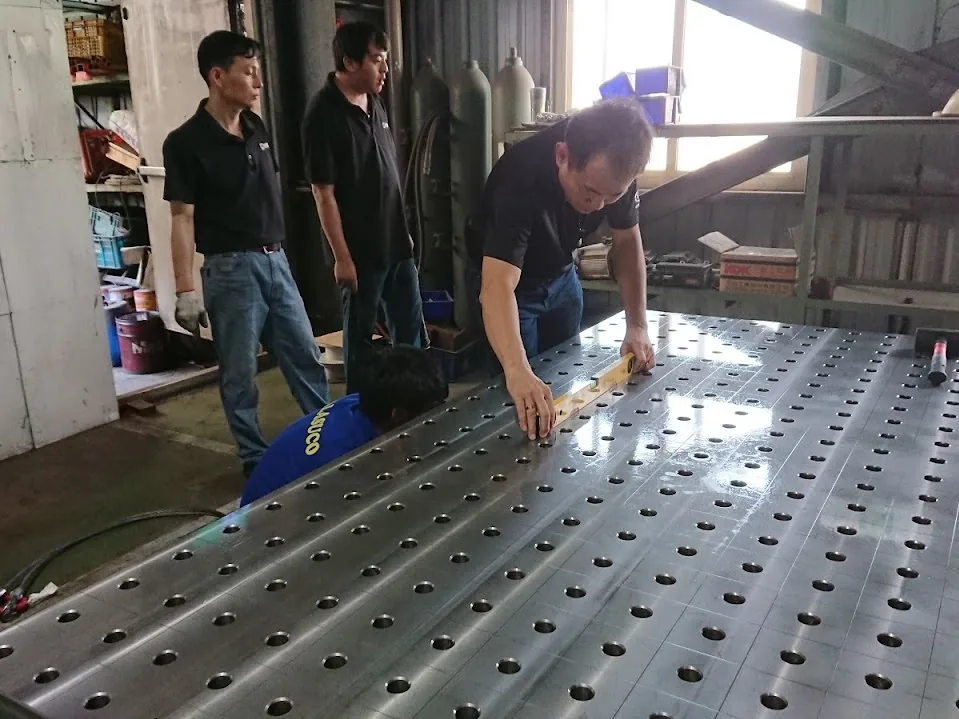
Before the crate is opened
The acceptance criteria were agreed at quotation: the grade, the reference area and what counts as a pass. Having that document in hand before opening the crate is what makes the check a measurement rather than an opinion.
- The delivery note against the order: quantity, model, configuration.
- The quotation or confirmed drawing: hole system, flatness grade, surface treatment, support type.
- External crate condition — photograph any damage before opening, because the carrier conversation starts there.
The twenty-minute check
None of this needs lab equipment. The pin test is the honest core of it: the holes exist so that pins, clamps and stops seat at known positions, and a pin that seats and holds in the positions your job depends on is the table doing what was bought.
- Overall size against the confirmed dimensions — length, width, platform height.
- Working faces: look across the machined top and side faces for transit damage.
- The hole grid: test-seat a pin in the datum holes you will actually use. A pin that seats fully is the practical test of a hole position.
- Surface treatment: oil film or nitrided surface present and undamaged.
- Support: levelling feet or castors as specified, turning and seating correctly.
The accessories against the kit list
If accessories were ordered with the table — as kits or single items — check them against the list the same day. Kits are matched to the table hole system before dispatch, so the check is count and condition: every item present, threads and seats clean, nothing damaged in transit. Finding a missing clamp on day one is a quick fix; finding it in three months is an argument.
Recording what you find
- Photograph anything questionable next to a ruler or the drawing dimension it concerns.
- Note positions precisely: which holes, which face, which corner.
- Record the ambient state too — a table checked on an uneven floor before levelling tells you nothing about the grade.
- File the photos and notes with the delivery paperwork, dated.
If something is wrong
Stop before reworking anything. Surface issues, holes that will not seat a clean pin, suspected transit damage — photograph them, note the positions, and agree the remedy with the supplier first. A localised issue has a practical fix agreed between both sides; unauthorised grinding or shimming before that conversation can turn a warranty position into a lost one.
A note on batches
For multi-table orders, repeat the pin test on every table at the same positions. Batch consistency is the promise — tables two and three should accept the same tooling in the same holes as table one — and the arrival check is where that promise is first verified.