
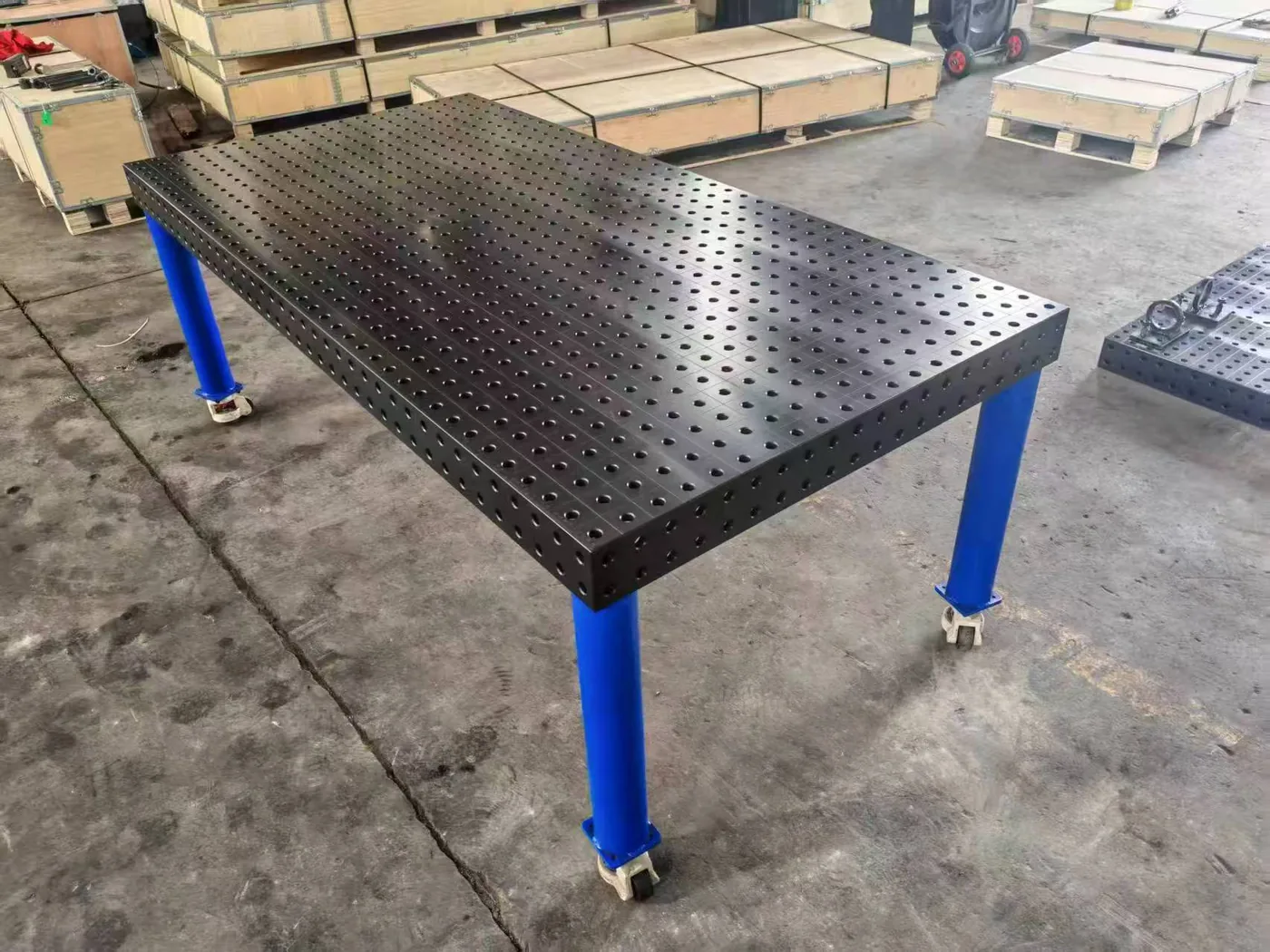
Three treatments, three different jobs
The names are easy to confuse because all three appear in the same place on a quotation. But they are not three grades of the same thing. Rust-preventive oil is a film: it protects the machined surface and washes off in use. Black oxide is a conversion finish: it darkens and slows corrosion at the surface. Plasma nitriding is a case: nitrogen diffuses into the steel itself, raising the surface hardness to HV450-630.
Only the last one changes how the surface wears under daily work. That distinction drives the whole decision.
Rust-preventive oil: protection in transit and in store
Oil is the baseline, and it matters even on tables that receive another treatment: a film on the machined faces protects them in transit and keeps the surface sound when the table sits idle. Wipe the working surface before the first job and the table is ready.
As the specified treatment, oil suits a table used occasionally — a job a week, light clamping, a shop that wipes the surface down anyway. The upkeep is the upkeep of the film: reapply when the table is idle, keep the holes clean in use. What oil does not do is resist wear at the hole grid; a table in daily production inserts and removes pins all shift, and a film does not harden anything.
Plasma nitriding: what the nitrogen does, and when it earns its cost
Plasma nitriding diffuses nitrogen into the steel surface, producing a hardened case of HV450 to HV630 that is part of the material — no layer to peel, no film to wipe. Applied after machining, it retains the hole dimensions and the machined geometry exactly, so the grid the clamps use is the grid that was specified.
The treatment earns its cost where wear actually happens: at the hole edges and clamp seats of a station used every shift. Insertion and removal are what round the holes of an untreated grid over the years; the hardened case postpones that for a long time. For a production station, a robotic cell table or any table the shop depends on daily, this is the treatment the duty cycle argues for.
Black oxide: a middle path, and its upkeep
Black oxide converts the surface to a dark, corrosion-resistant finish — between oil and nitriding in what it does. It slows surface rust, reduces glare under shop lighting, and suits buyers who want more than bare oil but whose duty cycle does not justify the nitriding step.
Its upkeep resembles the others: clean in use, protect when idle. The dark finish also stays presentable in customer-facing and demonstration settings, which some buyers value on its own.
Choosing from duty cycle and cleaning, not from the price list
Two honest notes on the decision. First, the treatments do not compete with the care routine — every table, treated or not, benefits from anti-spatter discipline and clean holes. Second, the treatment is confirmed before quotation because it is part of the production route, not an accessory added later.
| How the table lives | Treatment that fits |
|---|---|
| Occasional work, longer idle periods | Rust-preventive oil, reapplied when idle |
| Regular fabrication with standard care | Black oxide for a darker, corrosion-resistant finish |
| Daily production, frequent clamping | Plasma nitriding for the hardened grid |
Ordering, using and upgrading
State the duty cycle with the enquiry — how many shifts, what the clamping plan looks like, how the surface will be cleaned — and the recommendation comes back with the reasoning. A table specified with oil can be used straight from the crate after wiping the working surface; a nitrided table is machined first and treated after, so it arrives with its grid to specification. The upgrade path runs through the next order: buyers who start with oil and move to daily production usually specify nitriding on the second table, built to the same drawing as the first.