
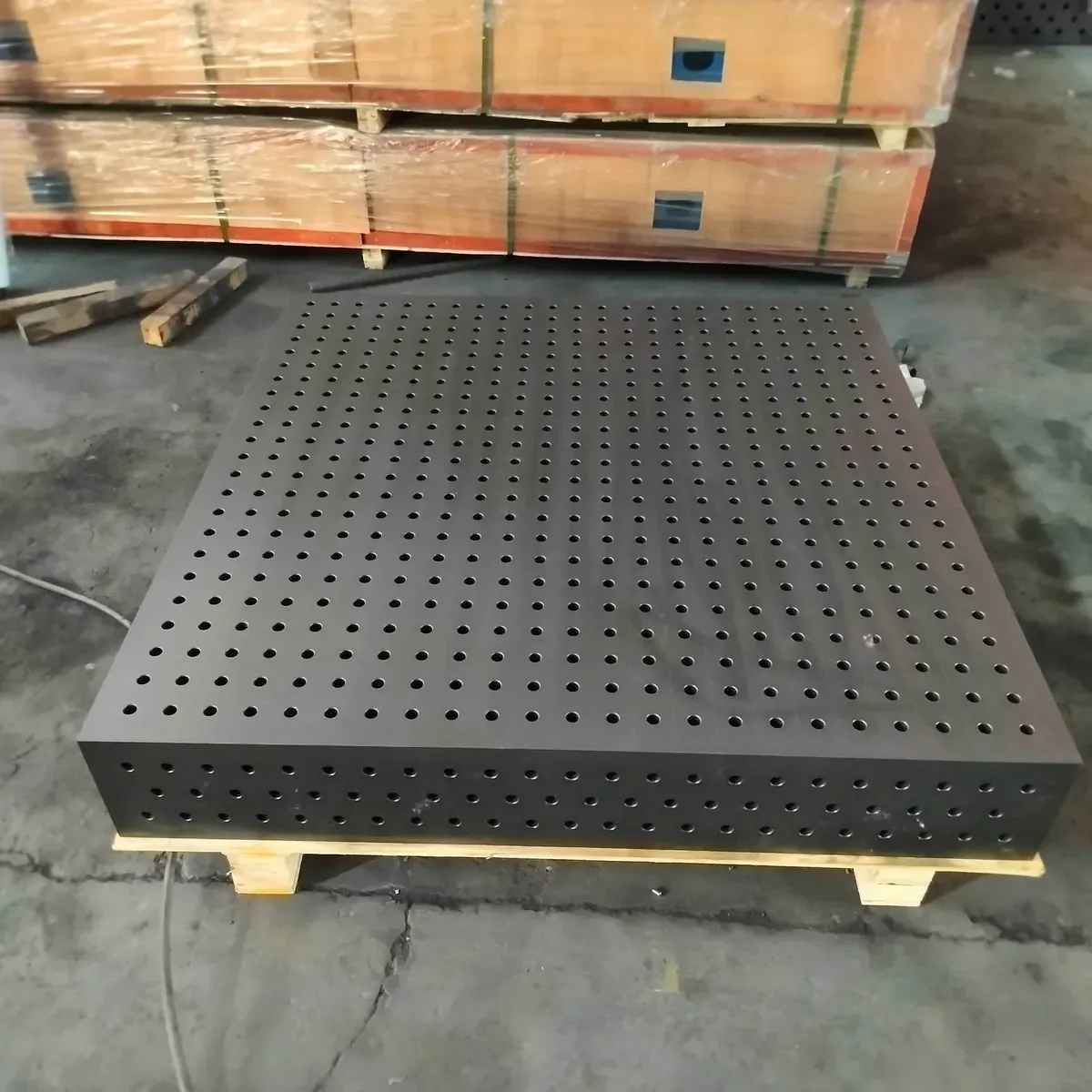
One product, several names
Suppliers and buyers reach for different words for the same object. Welding table is the general term. 3D welding table specifies that the hole grid runs across the top and the four side faces. Fixture table and clamping table describe the same platform from the tooling side — the surface you build a fixture or apply clamps on. Welding platform is simply the same product under a broader name.
When comparing quotations, translate every name into the specification underneath: hole system (D16/D22/D28/D36), spacing (50 or 100 mm), which faces are machined, the flatness grade, the materials and the surface treatment. Those are the facts that make two tables comparable — the name on the invoice is not.
What the 3D adds
The grid on the top face holds work down. The grid on the four machined side faces holds work out — vertical datums, side clamping, supports projecting past the edge. That is the entire content of the word 3D, and it is why a five-face platform prices above a top-face-only surface: five faces are machined and drilled, not one.
Fixture table: the same idea from the tooling side
Fixture table emphasises what the buyer intends to do — build fixtures. The platform is the same; the emphasis shifts to the accessory system that turns it into a working station. This is why the accessory range matters in any comparison: a fixture table without a matched clamp and stop system is just a drilled plate.
Clamping table and welding platform
| Name | Emphasis |
|---|---|
| Welding table | The general term; the process is welding |
| 3D welding table | The grid on five faces, not just the top |
| Fixture table | Building and repeating fixtures on the grid |
| Clamping table | Holding work through the weld with clamps in the grid |
| Welding platform | The same product; often the larger sizes |
Which name matters when you search or enquire
For searching, all the names lead to the category — use the one that matches your need: 3D welding table for the five-face product, fixture table for tooling-focused work. For an enquiry, skip the naming question entirely and send the specification: the workpiece, the hole system you prefer, the size and the flatness grade. The specification is what gets quoted; the name just gets it found.