
What changed, and under which instrument
The EU replaced its long-running steel safeguard with a permanent regime this summer. Regulation (EU) 2026/1384 was adopted on 17 June 2026, published in the Official Journal on 24 June 2026 and applies from 1 July 2026. It replaces Implementing Regulation (EU) 2019/159, which expired on 30 June 2026.
Two numbers define the regime. The annual tariff-free quota is about 18.3 million tonnes — 18,345,922 tonnes — spread over 30 product categories and allocated quarterly on a first-come, first-served basis. Above the quota, the out-of-quota duty is 50 per cent ad valorem, double the previous 25 per cent, and it stacks on top of any anti-dumping or countervailing duties already in force. The European Commission presents the measure as protection against global overcapacity, which it currently puts above 620 million tonnes per year.
The part that reaches into factory paperwork is Article 4(1): the melt-and-pour requirement. It is given practical form by Implementing Regulation (EU) 2026/1963, adopted in August 2026, which applies from 1 October 2026.
The declaration, line by line
Melt and pour means the place where the steel was first melted in a steelmaking furnace and first cast into a solid — a slab, a billet or an ingot. Rolling, coating, cutting or later fabrication do not change that identification. The point is to close the routing loophole: slab melted in one country, finished in another, and declared under the second country had, until now, qualified for whatever quota the finishing country held.
From 1 October 2026, the importer declares two fields per consignment and holds evidence for both.
| Field on the entry | What it means | Who produces the evidence |
|---|---|---|
| Melt-and-pour country | Where the steel was first melted and cast solid | The steel mill, via its certificates |
| Heat number | The identifier of the specific melt the material came from | The steel mill, on the Mill Test Certificate |
| Mill Test Certificate (MTC) | Primary evidence naming both fields | Issued by the mill; passed down the chain |
| Alternative documents | Invoice, delivery note, quality certificate, supplier declaration, production-process notes | Accepted only during the transition — see below |
The evidence ladder and the September 2027 deadline
The MTC is the primary evidence, and it must name both the melt-and-pour country and the heat number. Recognising that not every supply chain can produce one immediately, the implementing regulation allows alternative documents — invoices, packing documents, quality certificates, purchase-contract clauses, supplier declarations, cost and production records, customs documents from the exporting country, commercial correspondence and process descriptions — provided they state the melt-and-pour country and the heat number.
That flexibility expires. From 1 October 2027, alternative documents are accepted only as supplementary material; they no longer stand in for the MTC. An importer who spends 2026 shipping on paperwork assembled from invoices and promises has one year to get the mill certificate chain working, or the next consignment clears with difficulty or not at all.
What it costs when the quota is already gone
Quota is managed quarterly, and the first-come allocation rewards whoever files first. Industry trackers reported that the Turkish fourth-quarter hot-rolled quota was exhausted on 1 October 2026 — the first day of the quarter. Late filers ship into the 50 per cent duty or wait for the next quarter, and because the evidence requirement applies per consignment, a missing heat number can push a shipment into a quarter where its quota is already spent.
Country details matter at the margin. The European Economic Area members — Iceland, Liechtenstein and Norway — sit outside the regime. Russia and Belarus receive no quota and the old exemption for Russian steel slab has gone. Ukraine keeps an exemption that runs to summer 2028. The quota distribution for the second half of 2026 was set by Implementing Regulation (EU) 2026/1457, and the Commission must adopt the January-to-June 2027 distribution act by 31 December 2026.
What to ask a welding table fabricator
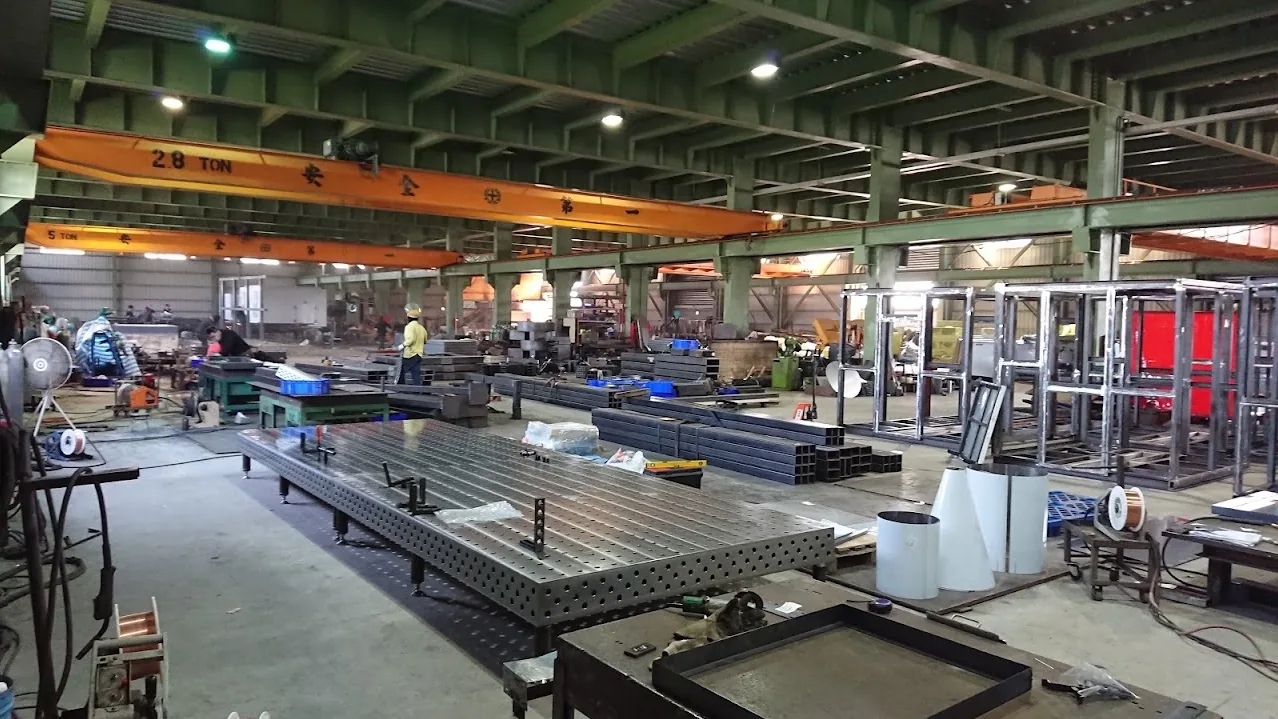
A welding table is a fabricated steel article: the plate is the material story. Whether a given finished article falls inside one of the quota categories is a question for the CN code and your customs broker — but the document trail the regime rewards is the same either way, and it starts at the mill that melted the plate.
Four things to request, in writing, before the first order.
- The material grade and its standard — for example Q235 or Q355 structural steel — and whether cast iron options such as HT250 or HT300 are supplied from a different source.
- Heat numbers for the plate actually used on your order, not a sample certificate for a different batch.
- A Mill Test Certificate from the steel mill naming the melt-and-pour country and the heat number, and a commitment on how it will accompany or precede each shipment.
- Confirmation that the invoice, packing list and production records carry weights and batch references consistent with those certificates.
What a fabricator can and cannot document today
An honest note on where a fabricator stands today. The grades, the machining route, the packing and the delivery time — around 10 days on standard configurations — are documented and quotable. Mill-level traceability belongs to the steel supplier, and a fabricator that buys plate through a trader may hold invoices without heat-level detail. Ask the question exactly as the customs entry will ask it: which mill, which heat, and can you produce the MTC? Treat a confident answer without a document as no answer.
How this differs from CBAM
The two regimes ask different questions about the same shipment. CBAM asks how much carbon was emitted making the steel, and charges for it through certificate sales that start on 1 February 2027. The steel regulation asks where the metal was melted and how much of it is coming in duty-free, and charges 50 per cent beyond the quota. One is a carbon file; the other is a customs file.
They share a single practical dependency: mill-level data. A fabricator that can trace its plate to a named mill — with heat numbers, an MTC and emissions data where available — can serve a European buyer under both regimes from the same file. The dates to watch: the distribution act for early 2027 due by 31 December 2026, a product-scope review by 30 June 2027, the end of alternative-document acceptance on 1 October 2027, and a Commission assessment by 30 June 2028 on whether melt-and-pour becomes the basis for quota access itself.