
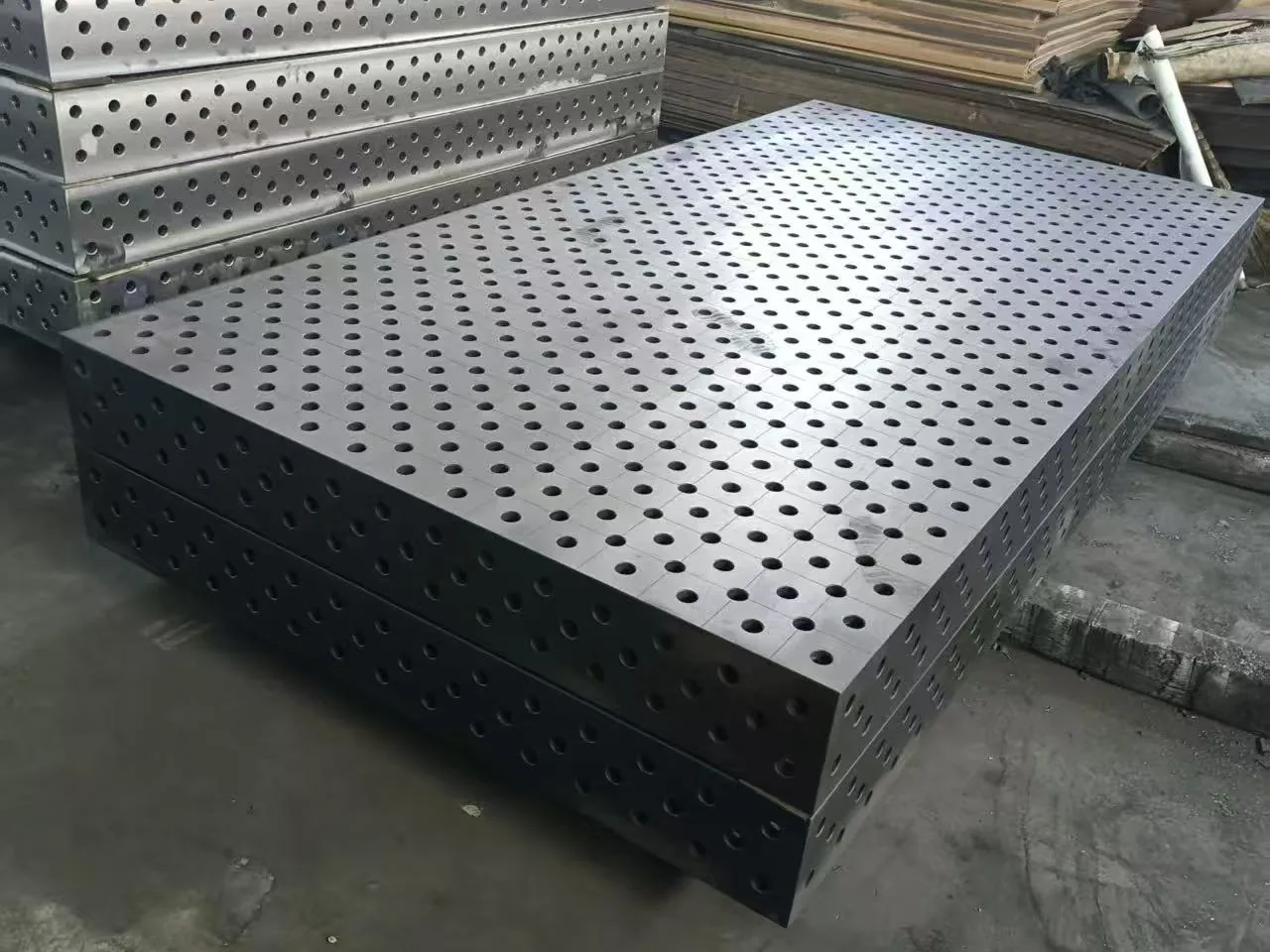
Two questions hiding in one
The table is at capacity — but in which sense? Capacity can mean envelope: the newest workpiece no longer fits with its clamps and access. Or capacity can mean time: the table is occupied all day, and the next job waits. The two problems have different solutions, and choosing the wrong one is expensive in either direction.
Envelope problems point to a bigger or longer table. Throughput problems point to a second station. A bigger table does not weld two jobs at once; it only makes each job larger.
When a bigger table is the answer
Note the trade from the size guide: a wider table adds fixture area but moves the centre farther from the operator. Going bigger solves the envelope only if the envelope is the problem.
- The workpieces themselves have grown: longer frames, wider bases, assemblies that now overhang with marginal support.
- One operator runs one job at a time, and the jobs simply got bigger.
- The shop wants a single large reference surface rather than two to keep levelled and maintained.
- Floor space favours one footprint over two.
When a second table wins
A second station also adds resilience: one table can be re-levelled, re-tooled or serviced without stopping the whole shop.
- Jobs wait while the table is busy — the queue, not the part size, is the bottleneck.
- Two processes would benefit from separation, for example tacking on one table and finishing welds on another.
- Different hole systems suit different product families, and forcing them onto one grid compromises both.
- A second operator can work in parallel.
The batch option: two identical stations
If the second table will run the same product family as the first, the strongest specification is the same specification. Tables built to one confirmed drawing make every clamp, stop and setup sheet transferable between them — the batch principle applied to a fleet of two. Quoting both tables together also confirms the accessories against the shared hole system.
Mixed fleets: matching systems across stations
Shops that run different product families sometimes deliberately mix hole systems — a D16 station for detail work beside a D28 station for heavy frames. That works when each station owns its product family and the tooling stays with it. What does not work is expecting one set of accessories to serve two systems; the tooling follows the grid, so plan which family lives on which station.
Planning the expansion
- Measure the current bottleneck honestly: envelope or queue time.
- For a second station: hole system, size, support type and its own layout sketch.
- For a bigger table: the clamp-plan sketch of the new, larger workpiece.
- Shared accessories versus per-station kits, decided deliberately.
- Delivery and staging: tables can arrive in sequence as the floor is ready.