
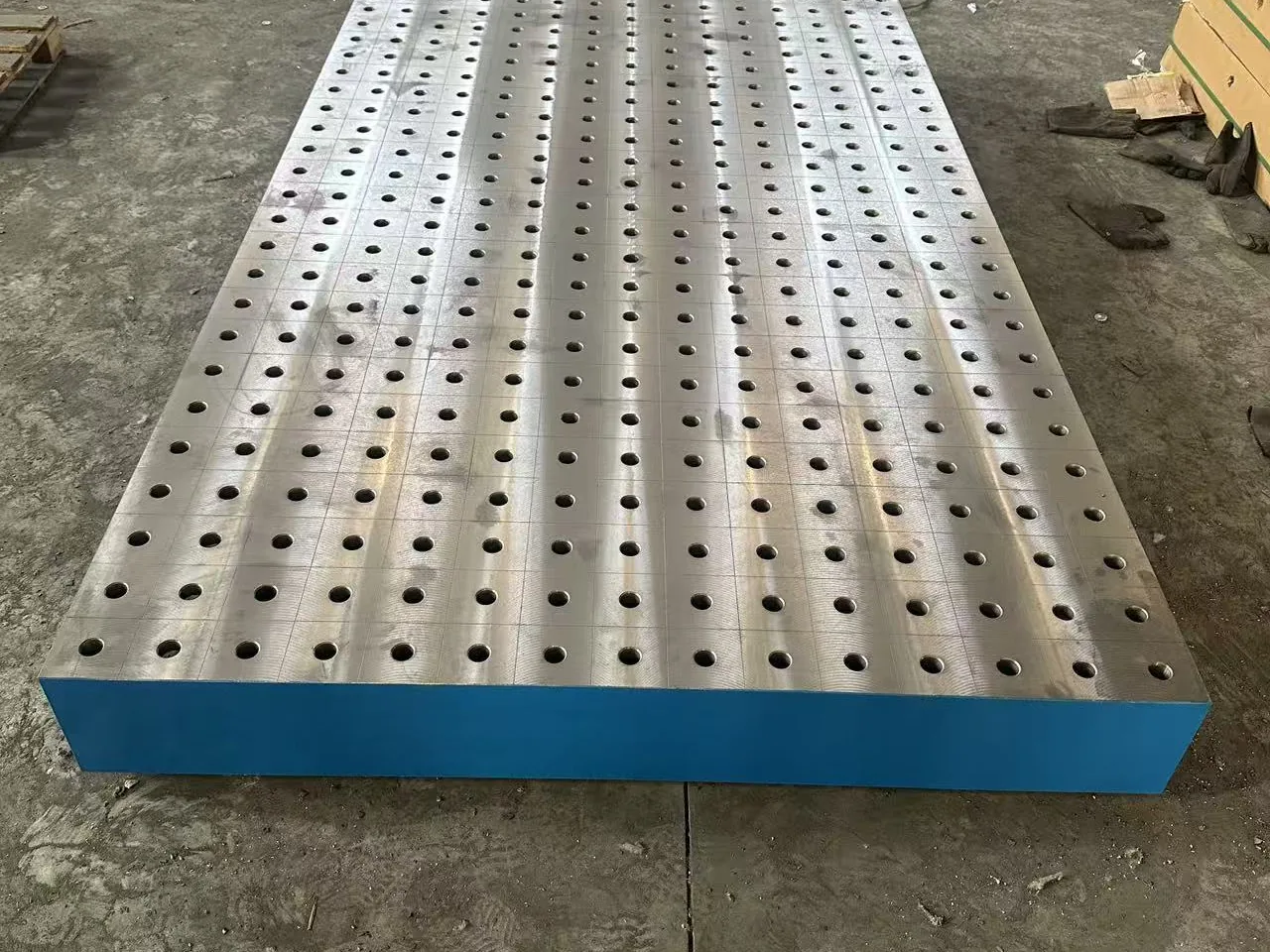
Three kinds of table, side by side
| Fabrication table | Flat welding table | 3D welding fixture table | |
|---|---|---|---|
| Top | Plain or slotted plate | Thick plain steel plate | Machined plate with hole grid |
| Side faces | Not machined | Usually not machined | Machined with holes |
| Clamping | C-clamps on the edge | C-clamps, magnets | Hole clamps, stops and squares on every face |
| Repeatability | Low | Low to medium | High: same setup every time |
| Best for | Layout, cutting, general work | Occasional welding | Production welding and repeat parts |
When a fabrication table is enough
If your work is mostly one-off repairs, cutting and grinding, a plain or slotted fabrication table does the job at a lower price. Accuracy depends on the operator measuring and squaring each part by hand.
When to move to a 3D welding table
- You weld the same part more than a few times and want every one identical.
- Setup and measuring take longer than welding.
- Parts need to be held square in three directions at once.
- You want to build fixtures without cutting and welding custom jigs.
A 3D table pays back through faster setup and fewer rejects. See modular vs dedicated fixtures and 2D vs 3D welding tables.
Choosing a 3D welding fixture table
Start with the size of your largest part, then the hole system: D16 for light precise work, D22 for mixed fabrication, D28 for heavy frames. Choose nitrided or machined steel for the surface.