
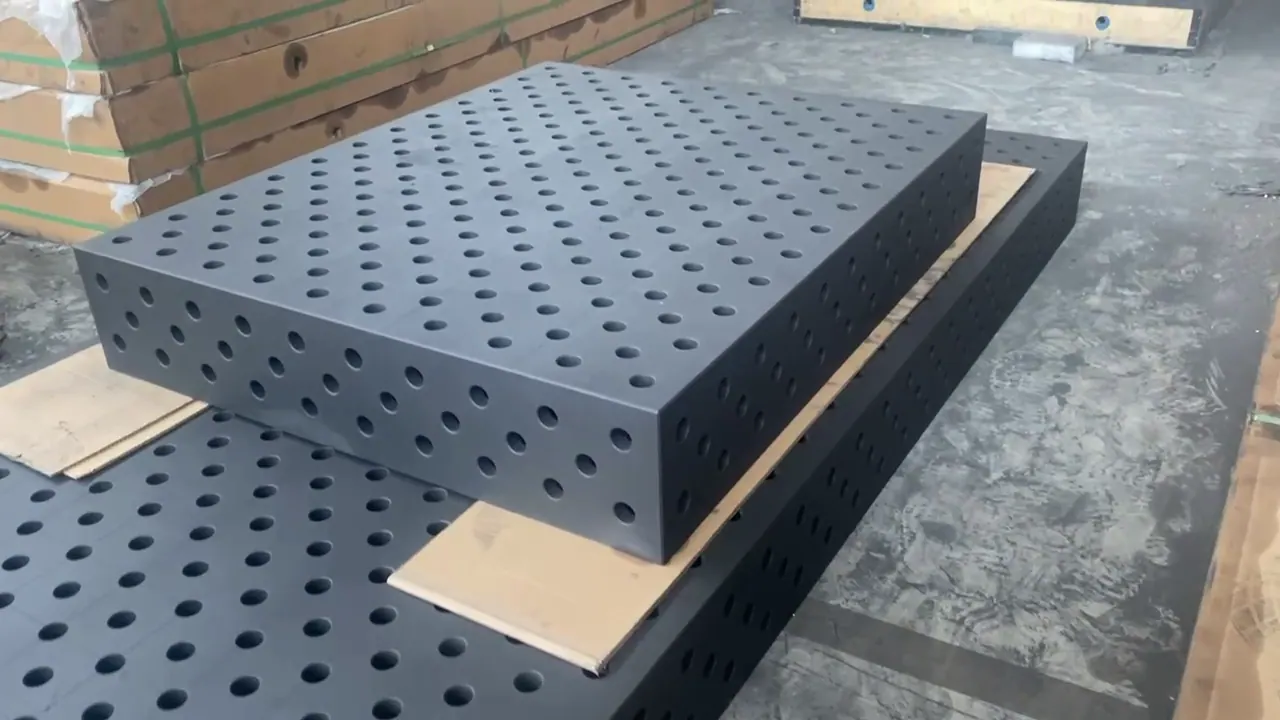
Step 1: Fix the specification in writing
The price only means something once the specification is fixed. Ask the factory to confirm each item on the quotation or proforma invoice:
- Table size in mm and in inches, and working height.
- Hole system (D16, D22 or D28), hole diameter and grid spacing.
- Surface: machined steel or nitrided.
- Flatness grade, for example 0.1 mm/m² standard or 0.05 mm/m² precision.
- Platform height, frame, levelling feet or castors.
- Which clamps and accessories are included.
US shops often already own D16 or D28 accessories. State the brand and system so the hole fit can be checked. See welding table hole types.
Step 2: Check duty before you compare prices
Steel welding tables imported into the United States can fall under Section 232 steel duties, which can change the landed cost a lot. Confirm the HTS classification with your customs broker and compute the duty on the invoice value. Our guide to Section 232 and welding table imports explains the current rules.
Step 3: Plan freight, packing and delivery
- Ask for the packed weight and crate dimensions with the quotation.
- Machined tables should ship in a sealed export crate with anti-rust protection. See welding table export packing.
- Decide the Incoterm (for example FOB or CIF) and who books the freight and customs clearance.
- Check that your site can unload a heavy crate: forklift, crane or a delivery truck with a liftgate.
Step 4: Build a landed-cost comparison
| Cost line | Factory-direct | Domestic supplier |
|---|---|---|
| Table price | Factory quote | Distributor price |
| Freight to port | Add | Usually included |
| Ocean freight and insurance | Add | Included |
| Duties and customs fees | Add | Included |
| Inland delivery | Add | Often included |
| Lead time | Production plus sea transit | Stock or short lead time |
For a single table, a domestic supplier with stock can be the better deal. For several tables, a distributor order or a batch from the factory usually wins. See ordering welding tables in batches.
Step 5: Inspect on arrival
Check the crate before signing for delivery, then check flatness and hole positions before the table goes into production. The receiving inspection checklist lists what to measure.